Si miras hacia arriba a través de las ciudades, pueblos y paisajes rurales remotos, Los cables aéreos se extienden como arterias invisibles., mantener a las comunidades modernas conectadas a electricidad confiable. Suministran energía a edificios urbanos de gran altura del mismo modo que abastecen a hogares dispersos en aldeas remotas., Formar una columna vertebral indispensable para la transmisión de energía en todo el mundo..
¿Qué es el cable aéreo??
Los cables aéreos son líneas de transmisión de energía suspendidas en el aire a través de torres o postes de servicios públicos., compuesto por conductores, aislamiento, estructuras de soporte, y accesorios. A diferencia de los cables subterráneos, Los conductores de los cables aéreos están expuestos directamente al aire.; este diseño ahorra espacio subterráneo y reduce los costos de mantenimiento, convirtiéndolos en una opción común para la transmisión de energía a larga distancia y redes eléctricas urbanas..
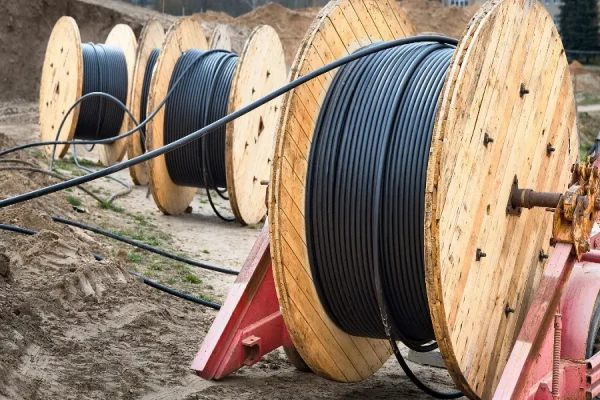
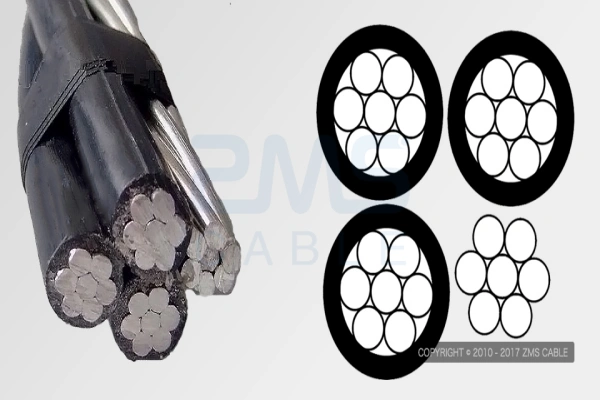
Estructuras principales de cables aéreos
Conductores: Normalmente hecho de aluminio o cobre., Estos transmiten corriente eléctrica.. Los conductores de aluminio son la opción estándar para líneas de alta tensión debido a su peso ligero y rentabilidad..
Al igual que los vasos sanguíneos humanos, cuanto mayor sea el área de la sección transversal del conductor, cuanto mayor sea su capacidad de carga actual. Por ejemplo, un cable con una sección transversal de 400 mm² puede transportar una corriente de aproximadamente 800 A.
Aislamiento: Los cables aéreos aislados están diseñados para entornos complejos, Mientras que los conductores aéreos desnudos dependen del aire como medio aislante natural..
Diseño para adaptación a ambientes especiales.:
Zonas costeras: Revestimiento engrosado y tratado con retardantes de llama..
Regiones de gran altitud/frías: Materiales resistentes al frío utilizados..
Áreas forestales: Revestimiento exterior tratado con repelente de pájaros y coloreado para una alta visibilidad..
Zonas de la industria química: Se utiliza revestimiento resistente a la corrosión..
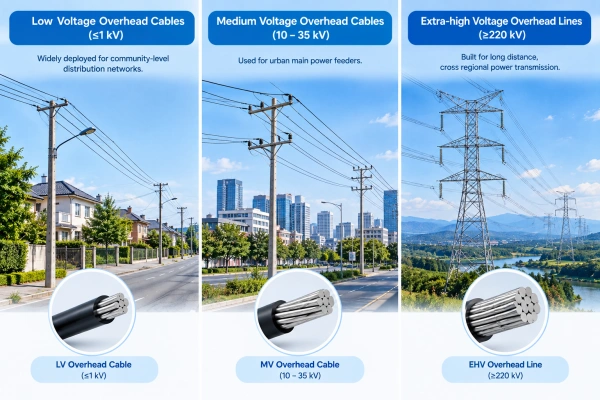
Tipos de cables aéreos
En base a su aplicación, Los cables aéreos se pueden clasificar en las siguientes categorías.:
Cables aéreos de baja tensión (≤1kV): Ampliamente implementado para redes de distribución a nivel comunitario.
Cables aéreos de media tensión (10-35 kV): Utilizado para alimentadores de energía principales urbanos..
Líneas aéreas de muy alta tensión (≥220kV): Construido para largas distancias, transmisión de energía interregional.
Ventajas y desventajas de las líneas eléctricas aéreas
La transmisión aérea de energía se utiliza ampliamente en las redes eléctricas de todo el mundo., Sin embargo, no es una solución universal..
Ventajas clave
El beneficio más inmediato es el ahorro de costes.. El cableado subterráneo requiere excavar superficies de carreteras, colocación de conductos de protección, y relleno, un proceso que implica gastos significativos. El cambio a líneas aéreas ahorra una cantidad sustancial en costes de ingeniería civil; El gasto total de construcción es entre un 40% y un 60% menor que el de los cables subterráneos., lo que lo convierte en una opción ideal para proyectos de electrificación con presupuestos limitados..
Las reparaciones también son más rápidas. Dado que los cables están expuestos, Los equipos de mantenimiento pueden localizar fácilmente las fallas sin necesidad de excavar.. Los tiempos de reparación reales se pueden reducir hasta 70%, permitiendo una restauración más rápida de la energía y minimizando las pérdidas causadas por cortes.
También ofrecen una excelente adaptabilidad al terreno.. En áreas difíciles de excavar, como regiones montañosas o pantanos, la instalación de cables subterráneos es compleja y costosa.. A diferencia de, Las líneas aéreas dependen de postes de servicios públicos o torres de transmisión., Hacer posible la electrificación en regiones con condiciones ambientales desafiantes..
Desventajas
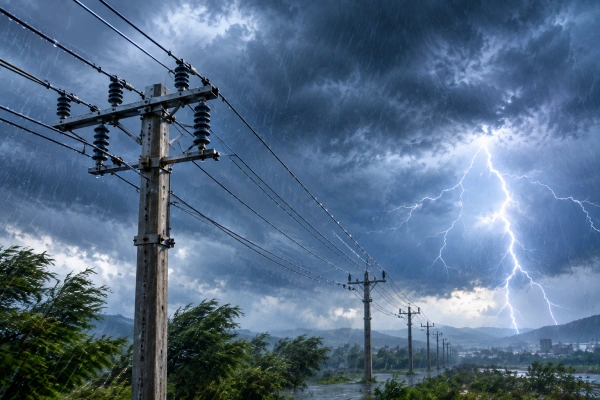
Porque los cables están completamente expuestos al aire libre., son muy susceptibles a las condiciones climáticas. Clima severo, como tifones, tormentas eléctricas, o acumulación de hielo: puede causar fácilmente que el conductor se balancee, descargas inducidas por rayos, o incluso rotura de línea; como consecuencia, Las líneas en áreas con clima severo requieren refuerzo estructural..
Las líneas energizadas generan campos electromagnéticos.; por lo tanto, Se deben mantener estrictas distancias de seguridad durante la construcción., Garantizar una separación adecuada de los edificios y áreas de actividad humana para mitigar los riesgos de seguridad..
Además, Los postes de servicios públicos y los cables aéreos pueden restar atractivo visual al paisaje urbano.. Muchas ciudades tienen esto en cuenta en sus evaluaciones de planificación para áreas escénicas privilegiadas., A veces se opta por abandonar las soluciones aéreas en favor de cables subterráneos..
Advertencia de seguridad
Existen riesgos de seguridad ocultos asociados con las líneas eléctricas aéreas; Tenga en cuenta los siguientes puntos durante sus actividades diarias.:
No construya casas o cobertizos directamente debajo de líneas eléctricas aéreas.. Las estructuras que están demasiado cerca de los conductores presentan un grave riesgo de descarga eléctrica., y dicha construcción no autorizada es inherentemente peligrosa.
Durante las tormentas, mantener una distancia de al menos 20 A metros de postes de servicios públicos y torres de transmisión.. No se acerque ni permanezca debajo de ellos para evitar el riesgo de rayos o descargas eléctricas..
Si ve un cable eléctrico que se ha roto y caído al suelo, no te acerques, y bajo ninguna circunstancia debe intentar moverlo o manipularlo usted mismo.. Informe la situación de inmediato y espere a que llegue personal profesional y solucione el problema..
Conclusión
Los cables aéreos sirven como líneas salvavidas aéreas indispensables para la transmisión de energía.. Impulsado por la innovación técnica continua, Están evolucionando hacia clasificaciones de voltaje más altas y una mejor resistencia ambiental., para adaptarse a una gama cada vez más amplia de condiciones complejas de proyectos en el extranjero.
ZMS Cable se especializa en cable R&D y fabricación. Toda la gama de nuestros productos cumple con los estándares internacionales IEC, así como con los estándares nacionales relevantes.. Hasta ahora, Hemos suministrado cables a miles de empresas y clientes en numerosos proyectos.. Nuestro portafolio de productos incluye cables de alimentación., cables de control, cables aéreos, cables fotovoltaicos, cables submarinos, cables con aislamiento mineral, y equipos utilizan cables. También se encuentran disponibles cables especiales personalizados para cumplir con los requisitos únicos del proyecto en el sitio..
Si estás abasteciendo cables aéreos para su proyecto de energía en el extranjero y necesita ayuda con la selección del modelo, cumplimiento de estándares o planificación presupuestaria, No dude en enviarnos las especificaciones de su proyecto y los requisitos de condición del sitio.. Nuestro equipo técnico proporcionará recomendaciones personalizadas y cotizaciones competitivas.. Esperamos colaborar en sus proyectos..