Alors que les structures énergétiques mondiales se transforment et que la fabrication intelligente et la durabilité continuent de progresser, le advanced polymer materials industry has become one of the most dynamic and promising emerging fields. Entre-temps, le industrie du câble, comme fondement de la transmission de l’énergie et de la communication, is undergoing a profound transformation—from traditional to high-performance, du système monofonction au système multifonctionnel.
When these two industries merge, they give rise to a revolution in how energy and information will be transmitted in the future.
As a cable manufacturer with years of expertise in production and international trade, ZMS Cable Manufacturer has been closely following and actively participating in this wave of industrial upgrading driven by material innovation.
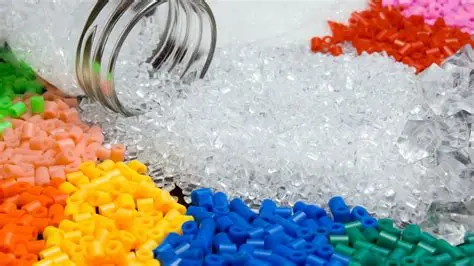
The Rise of the Advanced Polymer Materials Industry
Over the past decade, the global polymer materials industry has evolved from common plastics to highly functional, high-performance, and intelligent materials. The term “matériaux polymères avancés” refers to engineered polymers developed through molecular structure design, composite modification, and functional additives, providing higher mechanical strength, better heat resistance, superior flame retardancy, and lower environmental impact.
Common types of advanced polymer materials include:
- Modified Polyolefins (XLPE, LSZH, EVA, etc.)
- Fluoropolymers (FEP, PFA, ETFE, etc.)
- Thermoplastic Elastomers (TPE, TPR)
- Special Nylon and Polyimide Materials
- High-Performance Flame-Retardant and Insulation Compounds
The rapid development of these materials has opened vast opportunities for innovation in the cable industry. For years, traditional cables have been limited by temperature resistance, protection contre la corrosion, or flame-retardant performance. The introduction of matériaux polymères avancés has helped cable manufacturers break through these constraints, paving the way for high-performance, fiable, and environmentally friendly energy transmission solutions.
Des matériaux avancés au service de l'industrie du câble
Les câbles sont les « artères » des systèmes énergétiques et de communication modernes. Ils nécessitent une isolation supérieure, revêtement, résistance à la chaleur, stabilité chimique, et performances ignifuges. Avec les progrès de la technologie des matériaux polymères, la structure et la fonction des câbles ont été considérablement améliorées.
1. Stabilité thermique et fiabilité supérieures
Prendre polyéthylène réticulé (XLPE) à titre d'exemple. En réticulant chimiquement ou physiquement des chaînes moléculaires, la résistance à la température et la rigidité diélectrique du matériau sont considérablement améliorées. ZMS Cable Manufacturer utilise largement des matériaux XLPE importés dans l'isolation et le revêtement de moyen- et des câbles d'alimentation haute tension et câbles sous-marins, garantissant d'excellentes performances sous charge élevée et un fonctionnement à long terme.
2. Un système ignifuge plus sûr et plus écologique
Les câbles traditionnels en PVC libèrent des gaz nocifs lorsqu'ils brûlent, mais Faible fumée, zéro halogène (LSZH) les matériaux ont parfaitement résolu ce problème. Le ZMS LSZH cable series uses modified polyolefin compounds that meet IEC and EN standards for flame propagation, smoke density, and toxicity control. These eco-friendly materials align with global sustainability trends and are widely used in metros, centres de données, hôpitaux, and other public projects.
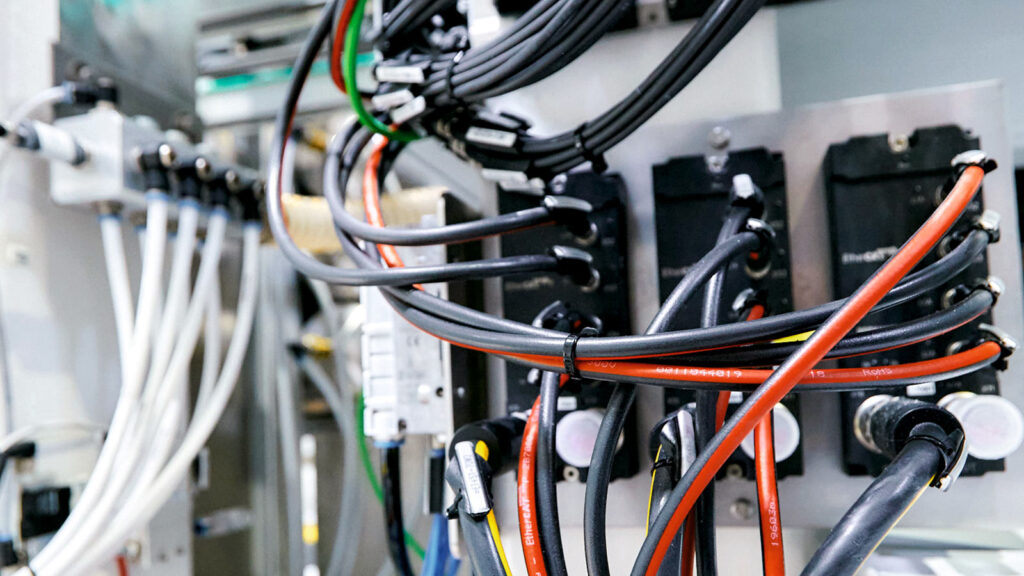
3. Lightweight and Flexible Design
With the rise of robotique, electric vehicles, and intelligent manufacturing, flexible and lightweight cable designs have become increasingly important. High-performance elastomer materials such as TPE et TPR provide cables with superior flexibility and abrasion resistance. ZMS incorporates these materials into its industrial automation cables, allowing stable performance under high-frequency motion and in compact spaces.
4. Corrosion and Waterproof Resistance for Harsh Environments
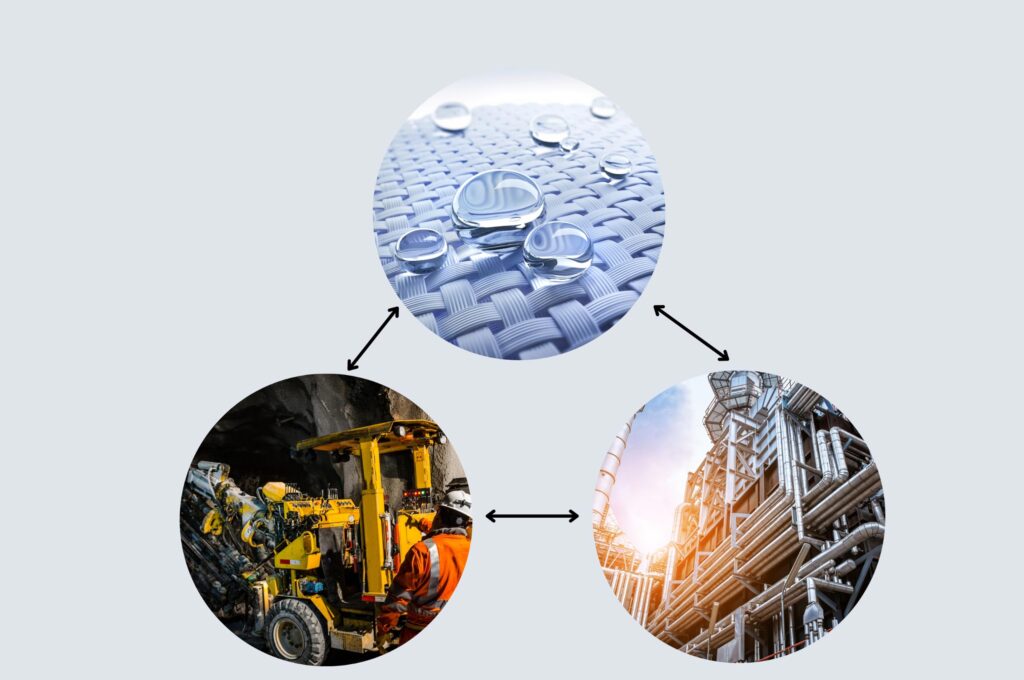
In environments such as marin, chimique, et industries minières, les câbles doivent résister au brouillard salin, huile, et corrosion chimique. Les fluoropolymères comme FEP et ETFE offrir des performances inégalées dans de tels scénarios. ZMS a intégré des matériaux fluoropolymères dans câbles hybrides sous-marins à fibres optiques et câbles de capteurs haute température, assurer la sécurité opérationnelle et la durabilité dans des conditions extrêmes.
ZMS Cable Manufacturer: De l’innovation matérielle aux solutions système
ZMS n'est pas seulement un producteur de câbles mais aussi un fournisseur de solutions complètes axé sur l'innovation matérielle. L'entreprise comprend que le plafond de performance des câbles est déterminé par les progrès des matériaux..
1. Implication profonde dans le matériau R&D
ZMS a accumulé une vaste expertise dans la technologie des matériaux et entretient des partenariats étroits avec des instituts internationaux de recherche sur les polymères.. À travers des projets collaboratifs, ZMS a développé des formulations exclusives de matériaux de gaine avec des caractéristiques telles que résistance aux hautes températures, Résistance aux UV, et résistance à la corrosion chimique, répondre aux besoins de diverses normes nationales et industrielles.
2. Contrôle qualité complet du processus
De l'inspection des matières premières, composition, et extrusion vers le câblage et la gaine, ZMS met en œuvre des tests rigoureux des paramètres de performance des matériaux. Chaque couche d'isolation et de gaine subit de multiples vérifications en laboratoire pour rigidité diélectrique, élongation, et résistance à l'abrasion, garantir que chaque mètre de câble répond aux normes internationales.
3. Promouvoir la durabilité et la fabrication verte
Les matériaux avancés ne sont pas seulement une question de performance mais aussi de responsabilité environnementale. ZMS s'engage à production de câbles durable, promouvoir sans plomb, sans halogène, et matériaux recyclables, et optimiser les processus de fabrication pour réduire la consommation d’énergie. Certaines gammes de produits utilisent désormais composés de polyoléfines recyclées, maintenir des performances élevées tout en minimisant l’impact environnemental.
Tendances futures: Intégration de matériaux avancés et de technologies de câbles
Au cours de la prochaine décennie, la synergie entre l'industrie des matériaux polymères et l'industrie du câble ne fera qu'approfondir. Plusieurs tendances clés façonneront cette évolution:
1. Matériaux intelligents et fonctionnels
ZMS estime que les futurs câbles ne seront pas seulement constitués de conducteurs et d'isolants, mais comporteront également auto-guérison, détection de température, et ignifuge auto-extinguible fonctions. De nouveaux matériaux tels que polymères auto-réparateurs et polymères conducteurs réalisent des percées dans la recherche. ZMS développe activement câbles de surveillance intelligents, intégrer des matériaux avancés à une technologie de détection électronique pour fournir des données de température et de courant en temps réel.
2. Croissance des applications haute tension et énergie marine
Projets mondiaux d’énergie renouvelable, tels que parcs éoliens offshore, photovoltaïque flottant, et systèmes d'énergie marémotrice—nécessite des câbles avec des tensions nominales plus élevées, une plus grande résistance mécanique, et une durée de vie plus longue. Ces applications exigent matériaux isolants à haute résistance diélectrique et résistants à l'eau, rendre les systèmes polymères avancés cruciaux. ZMS 220Systèmes de câbles sous-marins kV et supérieurs utilise du XLPE de classe mondiale et une technologie avancée de blocage de l'eau pour garantir la fiabilité dans les environnements en haute mer.

3. Économie circulaire et matériaux recyclables
Dans le cadre de l’initiative « neutralité carbone », la recyclabilité et la gestion du cycle de vie des matériaux deviennent des normes industrielles. Le développement de gaines de câbles biodégradables et matériaux polymères recyclés s'accélère. ZMS explore des modèles de chaîne d'approvisionnement en boucle fermée pour récupérer et réutiliser les matériaux des gaines de câbles, contribuer à un avenir plus vert et plus durable.
Innovation matérielle: Conduire une nouvelle ère dans l’industrie du câble
De la transmission d'énergie à la communication de données, de la terre à la mer, des réseaux conventionnels aux systèmes intelligents, chaque avancée dans l'industrie du câble est ancrée dans progrès de la science des matériaux. Les matériaux polymères avancés confèrent aux câbles des performances plus élevées, une plus grande adaptabilité, et une sécurité améliorée.
ZMS Cable Manufacturer comprend que ce n'est que grâce à une innovation matérielle continue qu'une entreprise peut rester compétitive sur le marché mondial. Regarder vers l'avenir, ZMS continuera à prendre science et technologie des matériaux comme son principal moteur, travailler avec des partenaires mondiaux pour construire un efficace, sûr, et réseau de transport d’énergie durable.
Matériaux innovants, Fabrication intelligente — Câble ZMS, Connecter le monde.