Single-core and multi-core cables are widely used in electrical design and field installation. Many engineers and buyers tend to select cables based only on past experience. This seemingly small decision may lead to insufficient ampacity, unexpected induced voltage, excessive electromagnetic interference, inflated construction budgets, or even failed project acceptance.
No single cable works for every application. To make a reliable choice, you cannot only look at the number of conductors. You need to evaluate load type, método de instalação, classe de tensão, site space and earthing plans together. This article shares practical engineering logic to help you sort out your selection for single-core and multi-core cables and avoid common on-site hazards.
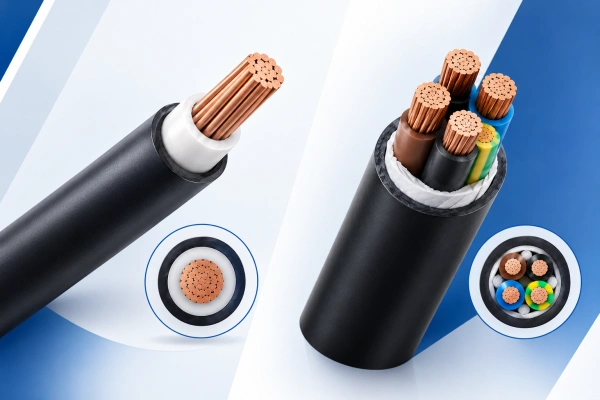
5 Key Factors to Check Before Selecting Single-Core and Multi-Core Cables
Before comparing single-core and multi-core cables for a power distribution project, sort out your requirements using these five criteria. They form the foundation for all your decisions on single-core and multi-core cables.
1. Power capacity and voltage class: Distinguish high-voltage high-power circuits from low-voltage power or control signal circuits.
2. Heat dissipation and required ampacity: Cable ampacity will change under tray stacking, direct burial or conduit installation.
3. Método de instalação: Confirm tray routing, underground direct burial, conduit runs, or tight spaces requiring frequent bending.
4. EMC requirements: Pay attention to induced voltage, eddy current heating and anti-interference needs for signal circuits.
5. Full-lifecycle cost: Consider not only cable price, but also accessories, labour for installation and later maintenance.
Single-Core and Multi-Core Cables: Quick Comparison Table
| Item de comparação | Single-Core Cable | Multi-Core Cable |
|---|---|---|
| Estrutura do Condutor | One single conductor with insulation, optional sheath and armour | Two or more individually insulated cores cabled together under one outer sheath; shield and filling layers available |
| Typical Voltage Class | Mainly for medium and high voltage distribution; also available for low-voltage high-power circuits | Mostly used in low-voltage systems; special designs apply to some medium-voltage applications |
| Heat Dissipation & Ampacidade | Separate cores allow good heat dissipation, delivering higher ampacity at the same cross-section | Cores packed inside the sheath trap heat, which derates the allowable current |
| Electromagnetic Features | Induced electromotive force easily occurs when multiple single-core cables are routed together; armour material selection is restricted | Magnetic fields from paired cores mostly cancel out; shielded designs suit signal transmission |
| Space Requirement | Multiple separate cables for one circuit, occupying more tray space | One cable carries multiple circuits for neat routing and space saving |
| Installation Difficulty | More cables to arrange, secure and earth; strict specification compliance required | One run completes multiple circuits for faster site wiring and termination |
| Aplicações Típicas | Transformer connections, high-voltage transmission, long-distance high-power main feeders | Building power distribution, cabinet internal wiring, instrument signal circuits, small equipment power supply |
In-Depth Breakdown of Single-Core and Multi-Core Cables
Electrical Performance of Single-Core and Multi-Core Cables
Electrical performance is the core consideration when choosing single-core and multi-core cables. The separate conductor structure of single-core cables dissipates heat efficiently, making them suitable for continuous high-current loads. When several single-core cables are grouped in an AC circuit, alternating magnetic fields can create induced voltage on metallic armour or metal clamps. Uncontrolled eddy current heating is a common risk, so non-magnetic armour and fixings are normally required for high-voltage single-core circuits.
Cores inside multi-core cables sit close together, and their magnetic fields largely cancel each other, lowering induced voltage risks. No entanto, clustered cores trap heat, so multi-core cables carry less current than an equivalent single-core cable. For instrument and sensor low-voltage signal runs, multi-core cables can integrate shielding layers to reduce external electromagnetic interference.
Construção & Material Features of Single-Core and Multi-Core Cables
Single-core cables have a simple build: conductor plus insulation, with optional outer sheath and armour for mechanical protection. This flexible structure supports thick insulation for high voltage and simplifies production of large cross-section sizes.
Multi-core cables are assembled by twisting insulated cores, adding fillers for a round cable shape, wrapping binder tapes and extruding a shared outer sheath. Total or individual core shielding can be integrated for multi-channel signal transmission. Large cross-section multi-core cables are harder to manufacture and less flexible due to cabling limitations.
Instalação & Routing Practices for Single-Core and Multi-Core Cables
A complete circuit using single-core cables requires multiple separate cables. Installers must maintain clear spacing between cores, and all clamps and metal supports need non-magnetic design to prevent eddy currents. On the upside, each single core is flexible and resists damage during long pulls.
One multi-core cable contains all required cores for its circuit. Fewer cables in trays or conduits create tidy layouts and simplify jointing and later fault tracing. The trade-off is a larger overall diameter, which demands a bigger minimum bending radius. Multi-core cables become less practical in cramped locations with repeated bending.
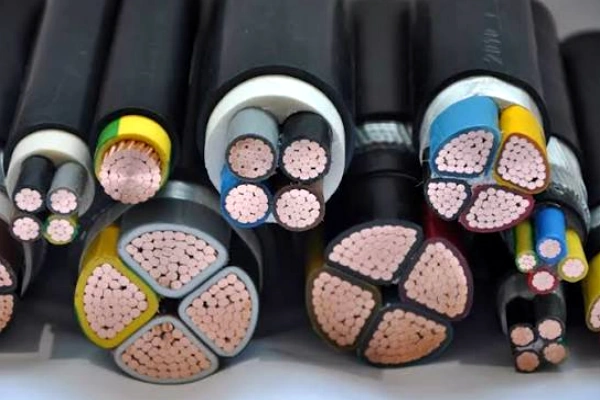
Safety Risks, Testing & International Standards for Single-Core and Multi-Core Cables
Both single-core and multi-core cables can be manufactured with flame-retardant, LSZH or armoured options, following clear test standards. Acceptance checks for single-core cables focus on armour material, earthing arrangements and induced voltage control, complying with IEC, BS and NEC distribution codes. Using magnetic armour on AC single-core circuits creates persistent eddy heating that accelerates insulation ageing.
For multi-core cables, key risks come from core-to-core insulation failure and incorrectly earthed shielding on signal circuits. LSZH sheaths can be specified for occupied public areas to meet smoke and toxic gas limits.
Full-Lifecycle Cost Comparison of Single-Core and Multi-Core Cables
When comparing raw material cost only, single-core cables may sometimes cost less for the same total ampacity. But a full single-core circuit requires more terminations, earthing accessories, larger tray capacity and longer installation hours. The total project cost can end up significantly higher.
Multi-core cables usually carry a higher unit price, yet one multi-core cable replaces many separate single-core runs. It cuts accessory quantities and reduces labour for wiring and termination. This overall cost advantage becomes very valuable on tight-deadline projects in markets with high labour costs. Relying only on cable unit price will underestimate the full investment of the circuit.
Application Guide: When to Use Single-Core and Multi-Core Cables
✅ Preferred applications for single-core cables
High-voltage main distribution circuits, transformer feeder connections, high-power motor supplies, long-distance tunnel or direct-buried transmission, power circuits requiring high continuous ampacity.
✅ Preferred applications for multi-core cables
Low-voltage building distribution, control cabinet internal wiring, sensor and instrument signal circuits, wiring inside machinery, low-voltage power circuits where compact routing reduces cable count.
Quick Check List for Single-Core and Multi-Core Cables
| Project Condition | Better Fit: Single-Core Cable | Better Fit: Multi-Core Cable |
|---|---|---|
| Circuit above 1kV, high-power main feeder | ☑ | |
| Control wiring and instrument signal transmission | ☑ | |
| Limited tray space, fewer cables required | ☑ | |
| Long runs with high ampacity demand | ☑ | |
| Goal to reduce site wiring and termination labour | ☑ |
Conclusão
There is no universal winner between single-core and multi-core cables. Selecting single-core and multi-core cables means balancing power demand, ambiente de instalação, electromagnetic requirements and project budget.
If you are working on a complex distribution circuit and unsure which single-core and multi-core cables suit your design, or sourcing IEC-compliant single-core and multi-core cabos de alimentação, get in touch with our technical team. Send us your single-line diagram, project voltage class and routing plan, and we will provide free cable selection review and technical recommendations.