Бронированные и небронированные кабели относятся к типам силовых кабелей., и это два наиболее часто используемых типа силовых кабелей.. Силовые кабели все состоят из проводника, изоляция проводника, и внешний защитный слой.
The Разница между бронированными кабелями и небронированными кабелями заключается в наличии или отсутствии броневого слоя. По сравнению с небронированными кабелями, Бронированные кабели имеют доп. металлическая защитная конструкция, предлагая более сильное сопротивление давлению, влияние, грызуны, и прочность на растяжение. Их можно использовать при прямом захоронении., открытый, и суровые промышленные условия.
На основе многолетнего опыта реализации проектов за рубежом, Компания ZMS Cables обнаружила, что большинство неудач проектов происходят не из-за проблем с качеством продукции., а скорее к неправильным сценариям применения и несовместимым конфигурациям брони, что приведет к переработке. В этой статье будет представлен углубленный анализ этих двух типов кабелей, чтобы помочь клиентам снизить риски..
Что такое бронированный кабель?
Что такое небронированный кабель?
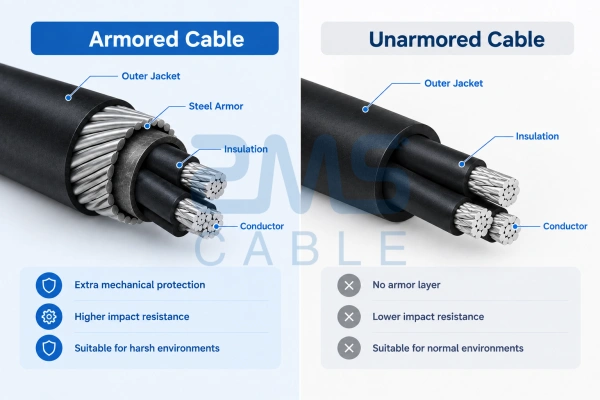
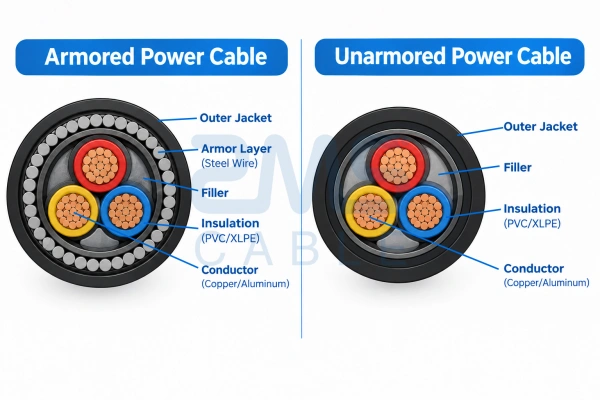
Бронированный кабель представляет собой усиленный силовой кабель с дополнительным слоем металлической брони между слоем изоляции кабеля и внешней оболочкой.. Распространенными материалами брони являются стальная лента и стальная проволока.; В зависимости от требований также можно использовать алюминиевую ленточную броню.
Общая структура бронированного кабеля, изнутри наружу, включает в себя:
проводник → изоляционный слой → внутренний облицовочный слой → слой металлической брони → внешняя оболочка.
Слой металлической брони не меняет проводимость кабеля, но может противостоять внешним силам, таким как сжатие., влияние, напряжение, и укусы животных, одновременно обеспечивая определенную степень электромагнитного экранирования..
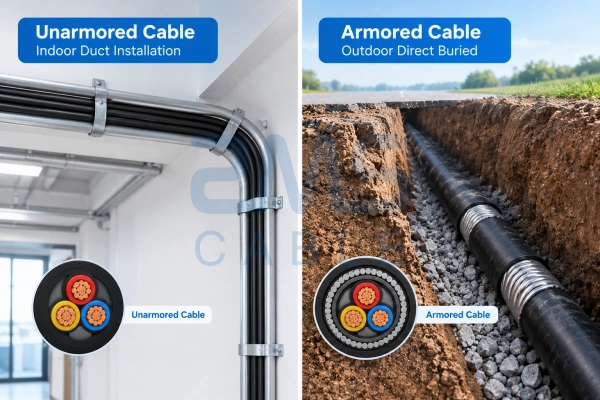
Бронированные кабели в основном используются в таких сценариях, как прямое подземное захоронение., наружные кабельные лотки, промышленные предприятия, переезды дорог, и глубокозаглубленные трубопроводы.
Что такое небронированный кабель?
Небронированный кабель — это базовый силовой кабель без металлического защитного слоя..
Стандартная структура небронированного кабеля включает только:
проводник → изоляционный слой → внешняя оболочка.
Особенности небронированного кабеля: Простая структура, Гибкий кабель, небольшой радиус изгиба, простая установка, и более низкая стоимость.
Небронированные кабели не имеют механической защиты и не выдерживают сжатия., влияние, или сильное напряжение. Небронированные кабели подходят только для сред с низким уровнем риска, например, для полностью защищенных внутренних кабелепроводов., закрытые кабельные лотки, и внутренняя проводка оборудования.
Разница между бронированным кабелем и небронированным кабелем
| Тип | Бронированный кабель | Небронированный кабель |
|---|---|---|
| Состав | Слой металлической брони | Нет броневого слоя |
| Механическая защита | Устойчивость к давлению/удару/растяжению, против грызунов/термитов | Нет защиты, легко повредить |
| Установка | Подполье, прямое захоронение, траншеи, Промышленные места | Крытый, кабельные лотки, трубопроводы, охраняемые территории |
| Функции | Жесткий, тяжелый | Мягкий, гибкий, свет |
| Продолжительность жизни | Очень прочный, долгоиграющий | Легко стареет на открытом воздухе |
| Расходы | Выше | Более экономичный |
Распространенные типы бронированных кабелей
| Тип брони | Сокр.. | Состав | Ключевые приложения |
|---|---|---|---|
| Стальная лента бронированная | СТА | Двойная стальная лента, высокая устойчивость к раздавливанию | Плоское прямое захоронение, муниципальные сети, стандартные воздуховоды |
| Тонкая стальная проволока, бронированная | СВА | Многожильные тонкие провода, Высокая прочность на растяжение | Переправа через реку/гору, воздушная подвеска, глубокие колодцы |
| Грубая стальная проволока, бронированная | CWA | Грубая проволока армированная, сверхвысокая прочность на разрыв | Длиннопролетная подвеска, добыча, сверхмощный |
| Алюминиевая лента, бронированная | АТА | Легкий вес, сопротивление ржавчине, немагнитный | Среды с высокой коррозией, Магнитные поля переменного тока |
Бронированные кабели против. Небронированные кабели: Как выбрать?
На основе зарубежных инженерных стандартов и практического опыта эксплуатации., ZMS Cables обобщает простую логику выбора:
Сценарии выбора бронированных кабелей:
- Кабели должны быть проложены непосредственно под землей.;
- Открытый под открытым небом, поле, или заводская территория;
- Объекты с риском механического дробления, копать, или воздействие;
- Лесные массивы и сельские районы с укусами диких животных;
- Переправа через реки, башни, или высотная подвеска, требующая прочности на растяжение.
Сценарии выбора небронированных кабелей:
- Полностью внутренняя установка, использование закрытых кабелепроводов и герметичных кабельных лотков;
- Внутренняя проводка внутри оборудования;
- Строительная среда свободна от внешних повреждений;
- Ограниченный бюджет проекта с комплексными защитными мерами.
Точные котировки кабеля: Информация, которую вы должны предоставить как клиент
Многие запросы за рубежом страдают от повторяющихся контактов и низкой эффективности., в первую очередь из-за неполных параметров.
Мы собрали основные параметры для быстрых котировок, на которые инженеры могут напрямую ссылаться при отправке:
- Стандарт исполнения: МЭК / БС / GB и другие стандарты, определенные проектом
- Уровень напряжения: 0.6/1кВ, 10кВ, 35кВ, и т. д..
- Количество жил и поперечное сечение: например, 3×95+1×50мм²…
- Требования к броне: Броня из стальной ленты / Броня из стальной проволоки / Небронированный
- Материал оболочки: ПВХ / ЧП / LSZH огнестойкий и огнестойкий.…
- Среда использования: Крытый / Прямое захоронение / На открытом воздухе / Коррозионный / Очень холодно
- Количество покупки, Место доставки, и требования к срокам поставки
Часто задаваемые вопросы (Часто задаваемые вопросы)
1 квартал: Можно ли использовать бронированные кабели в качестве экранированных кабелей??
- Бронированные кабели могут обеспечить базовую электромагнитную защиту., но они не могут заменить специальные экранированные кабели.
- Для высокочастотных, прецизионное оборудование, и приложения для измерения высокого напряжения, профессионально экранированные кабели по-прежнему необходимы.
2 квартал: Можно ли временно прокладывать небронированные кабели на открытом воздухе?
- Это не рекомендуется. Кратковременное воздействие ускоряет старение оболочки, растрескивание, и попадание воды, и, скорее всего, приведет к нарушению изоляции.
Q3: Должны ли бронированные кабели быть заземлены?
- Да. Технические характеристики требуют надежного заземления на обоих концах слоя брони, чтобы избежать угроз наведенного напряжения и утечки..
Q4: Есть ли разница в допустимой нагрузке по току между двумя типами кабелей??
- Под тем же сечением и материалом, текущая пропускная способность в основном одинакова. Структура брони не влияет на проводимость, только улучшает механическую защиту.
Почему стоит выбирать бронированные/небронированные кабели ZMS?
Как производитель кабеля, который уже давно обслуживает зарубежных подрядчиков и подрядчиков EPC., мы понимаем, что зарубежные проекты предъявляют более высокие требования к стабильности и соблюдению требований.
Zms кабель производит полный ассортимент бронированных и небронированных силовых кабелей в строгом соответствии с международными стандартами, такими как IEC., БС, и ГБ. Материалы, используемые в проводниках, изоляция, броня, и оболочки полностью контролируются, устранение потенциальных инженерных рисков, таких как переработанные материалы и ложная маркировка поперечных сечений..
Более того, мы можем предоставить полный набор отчетов о заводских испытаниях, квалификационные документы, и сторонние сертификаты. Мы также поддерживаем индивидуальные конструкции огнестойких материалов., огнестойкий, холодный, и коррозионностойкие кабели для особых условий эксплуатации, соответствие потребностям различных проектов распределения электроэнергии.

Заключение
Не существует абсолютного превосходства или неполноценности между бронированными и небронированными кабелями.; все дело в пригодности для конкретного сценария применения. Небронированные кабели предпочтительны для контролируемых помещений., в то время как бронированные кабели необходимы для прокладки на открытом воздухе и в суровых условиях для обеспечения долгосрочной стабильной работы..
Если вы не уверены, нужна ли вам бронированная конструкция или как выбрать модели и стандарты, пожалуйста, пришлите параметры вашего проекта и условия строительства. Техническая команда ZMS Cable предоставит бесплатное профессиональное решение по выбору и точное ценовое предложение..