For residential service connections, street lighting and low-voltage distribution projects in the UK, Avustralya, New Zealand and other overseas markets, concentric cable is a widely used cable type. Unlike standard multi-core power cables, it has neutral/earth conductors helically wrapped around the insulated core.
From our experience supporting global projects, many procurement teams mix up the two main variants: CNE and SNE. Wrong selection leads to incompatible earthing systems and failed site inspection. This article skips complex internal calculations, explains core concepts, product differences and key selection points to help engineers quickly assess project suitability.
What Is Concentric Cable? Basic Structure
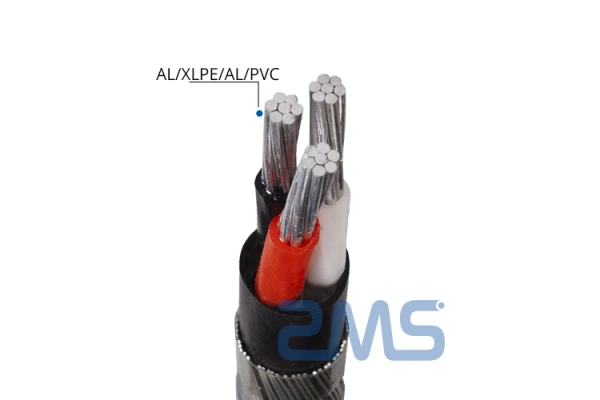
The defining feature of concentric cable is a helical conductor wrapped outside the phase conductor. This layer acts as the neutral or earth return path, removing the need for separate parallel neutral cores.
Layer composition from inside out:
- Faz İletkeni: Stranded copper or aluminium to carry main load current
- Yalıtım Katmanı: XLPE or PVC. XLPE offers better heat resistance
- Concentric Neutral Layer: Multi-strand copper wires wound helically for neutral and fault earth return
- Outer Sheat: PVC / PE / LSZH, protecting the cable against moisture, UV and chemical attack
Key benefit: The integrated design creates a smaller overall cable diameter and simpler installation. It is widely used for low-voltage distribution such as service connections and street lighting. Most common rating is 0.6/1kV.
Two Main Types: CNE and SNE
Your earthing system determines whether CNE or SNE is required. These are not interchangeable and must match TN-C-S or TN-S local grid requirements.
| Tip | Ad Soyad | Structure Feature | Suitable Earthing System | Tipik Uygulama |
|---|---|---|---|---|
| CNE | Combined Neutral and Earth Concentric Cable | Single layer of bare copper concentric layer; neutral N and protective PE combined as PEN conductor | TN-C-S (PME) | Residential service feeders, standard for UK domestic connections |
| SNE | Separated Neutral and Earth Concentric Cable | Insulated independent neutral core plus separate bare copper protective earth | TN-S system | Ticari binalar, projects requiring separate protective earthing |
Engineering Note: For UK DNO distribution projects, check BS 7870 and confirm your earthing system before choosing CNE or SNE.
Four Core Factors for Cable Selection
You do not need advanced thermal stability formulas for initial assessment. Focus on these four points, and your cable supplier can complete detailed verification later:
Confirm your earthing system
- Prioritise selecting CNE or SNE. Wrong choice will fail acceptance checks.
İletken malzemesi: Copper or Aluminium
- Bakır iletken: Great conductivity and flexibility, ideal for shafts, tight spaces and lighting circuits; higher cost.
- Aluminium conductor: Light weight and lower material cost, suitable for long overhead service lines.
Sheath and protection grade:
- PVC: Standard for indoor and dry outdoor use, uygun maliyetli.
- PE kılıf: Superior moisture resistance for direct burial underground.
- LSZH: Düşük duman sıfır halojen, specified for public buildings such as hospitals and shopping malls.
- Add armour if buried in ground with stones or risk of mechanical damage.
Relevant standards:
- İngiltere & Commonwealth markets: BS 7870-4; general international reference IEC 60502-1.
- Avustralya & New Zealand projects follow AS/NZS; North American projects refer to UL specifications.
Tipik Uygulamalar
- Residential service connection feeders
- Street lighting supply circuits
- Urban low-voltage last-mile underground distribution
- Low-voltage incoming supply for small commercial buildings
Sıkça Sorulan Sorular (SSS)
1. Çeyrek: Can CNE and SNE replace each other?
HAYIR. They must strictly follow your TN-C-S / TN-S earthing design. Substitution causes non-compliant earthing systems and inspection rejection.
2. Çeyrek: Can concentric cable be buried directly underground?
Non-armoured versions are not recommended for direct burial. Select armoured concentric cable for buried installation to resist mechanical damage from soil.
3. Çeyrek: What should be noted for aluminium concentric cable installation?
Use dedicated crimp lugs for aluminium conductors with anti-oxidation compound. Ordinary copper lugs cannot be used directly.
4. Çeyrek: Can concentric cable be installed overhead?
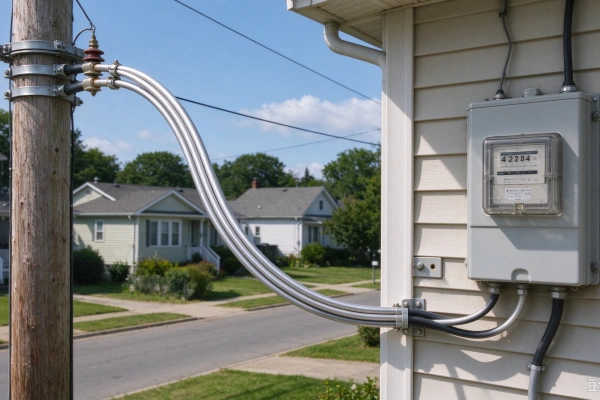
Evet. Aluminium concentric cable is lightweight and commonly used for overhead service lines from utility poles to meter boxes.
Why Choose ZMS Concentric Cable
ZMS supplies full CNE and SNE series 0.6/1kV concentric cables compliant with BS 7870, IEC 60502-1 and other major international standards.
We offer copper or aluminium conductors, bare or tinned copper concentric layers, with PVC, PE, LSZH and armoured options. Full test certificates are provided after production to meet overseas tender and site inspection requirements.
If you are unsure about CNE/SNE selection, conductor size or sheath configuration, our engineering team can review your project conditions and recommend suitable solutions.
Çözüm
Concentric cables feature the integrated helical neutral layer. The core rule for choosing CNE or SNE is matching your site earthing system. At the early design stage, confirm earthing type, iletken malzeme, installation environment and applicable project standards to avoid most compliance risks.
If you are working on overseas residential service connections, street lighting upgrades or low-voltage distribution projects and need support selecting concentric cables, send us your project parameters, site conditions and required standards. We can provide technical recommendations and competitive quotations.