Doğru denizaltı kablosunun seçilmesi açık deniz rüzgar santralleri için önemli bir karardır, ada enerji projeleri, deniz platformları, ve güç ara bağlantı sistemleri. Tedarik ekipleri için, Bu nedenle kablo seçimi voltaj ve iletken boyutundan daha fazlasıdır. Kablonun proje rotasına uyması gerekiyor, su derinliği, deniz yatağı koşulları, kurulum yöntemi, koruma gereksinimleri, ve geçerli standartlar.
Bu denizaltı kablosu satın alma kılavuzunda, alıcıların denizaltı kablolarını seçerken dikkate alması gereken temel faktörleri ve fiyat teklifi talep etmeden önce hangi bilgilerin hazırlanması gerektiğini açıklıyoruz.
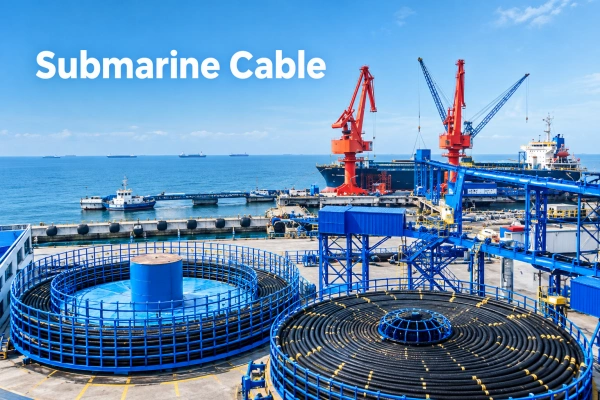
Denizaltı Kablosu Nedir??
Denizaltı kabloları, açık deniz sahaları ile anakara arasında elektrik taşımak veya iletişim sinyallerini iletmek için su altında çalışan özel olarak tasarlanmış kablolardır.. Ne için kullanıldıklarına bağlı, genellikle iki ana kategoriye ayrılırlar: deniz altı elektrik kablosu ve deniz altı fiber optik kablo.
Denizaltı güç kabloları açık deniz rüzgar santrallerinde yaygın olarak kullanılmaktadır., açık deniz petrol ve gaz platformları, ada güç kaynakları, anakara ve adalar arasındaki güç bağlantıları, sınır ötesi güç bağlantıları, ve diğer denizcilik altyapısı.
Our ZMS submarine cable product series is specifically designed for applications including offshore islands, petrol platformları, power interconnections, and other underwater power transmission projects.
What Are the Main Types of Submarine Cables?
The right submarine cable type depends mainly on the transmission system, voltaj seviyesi, başvuru, and underwater environment.
ZMS submarine cable product range includes HVAC submarine cable, HVDC submarine cable, denizaltı güç kabloları, and other specialized submarine cable designs. Our company also provides subsea fiber optic cables for underwater communication applications. The table below gives a quick overview of the main types of submarine cables.
| Tip | İşlev | İletim Ortamı | Uygulamalar |
|---|---|---|---|
| Submarine Power Cable | Power delivery | Copper or aluminum conductor | Offshore wind projects and island power systems |
| HVAC Submarine Cable | AC power delivery | Power conductor | Short and medium offshore links |
| HVDC Submarine Cable | DC güç dağıtımı | Power conductor | Uzun mesafeli ara bağlantılar |
| Denizaltı Fiber Optik Kablo | Veri ve sinyal iletimi | Optik fiber | Küresel internet omurgası |
Projeniz için ZMS denizaltı kabloları hakkında daha fazla bilgi edinmek ister misiniz?? Ürünlerimizi keşfedin denizaltı kablosu Mevcut modeller ve teknik özellikler için ürün sayfası, veya fiyat teklifi ve daha fazla ayrıntı için doğrudan bizimle iletişime geçin.
Denizaltı Kablosunun Yapısı Nedir??
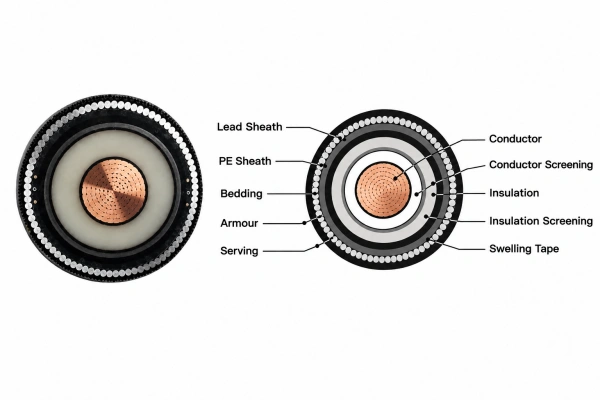
Denizaltı kablosu tipik olarak birkaç katmandan oluşur, her katmanın belirli bir elektriğe hizmet ettiği, mekanik, veya çevresel işlev.
Tipik bir XLPE denizaltı güç kablosu birkaç katmandan oluşur, ve her katmanın belirli bir işi var. İçeriden dışarıya, bunlar iletkeni içerebilir, iletken ekran, XLPE izolasyonu, yalıtım ekranı, metalik ekran, su engelleyici katman, yatak takımı, zırh, ve dış kılıf.
- İletken elektrik akımını taşır ve genellikle bakır veya alüminyumdan yapılır..
- İletken ekranı ve yalıtım ekranı, XLPE yalıtımı etrafındaki elektrik alanının kontrol edilmesine yardımcı olur. XLPE yalıtımı ana elektrik yalıtımını sağlar. Kablo tasarımına bağlı olarak, metalik ekran veya kılıf aynı zamanda elektriksel koruma sağlar ve arıza akımlarının üstesinden gelmeye yardımcı olur.
- Kablo su altında kurulduğundan, su koruması önemlidir. Su engelleyici katmanlar ve radyal su bariyerleri, suyun kablo boyunca yayılmasını veya iç katmanlara ulaşmasını engellemeye yardımcı olur. Bu, kablonun uzun vadeli güvenilirliğini artırmaya yardımcı olur.
- Kablonun ayrıca kurulum ve çalıştırma sırasında mekanik stresle başa çıkması gerekir.. Zırh ve dış kılıf ek bir koruma katmanı sağlar. Çelik tel zırh, özellikle, kablonun çekme kuvvetlerine dayanmasına yardımcı olur, darbe, aşınma, balıkçılık faaliyeti, ve diğer dış stresler.
ZMS medium-voltage submarine cable construction, Örneğin, includes a compacted water-blocked conductor, semiconductive screens, XLPE izolasyonu, waterproof layers, copper screening, and protective outer layers.
What Technical Specifications for Submarine Cable Should You Consider?
Choosing the right submarine cable takes more than simply picking a voltage level. You also need to consider how much power or data the cable will carry, where it will be installed, and the conditions it will face underwater.
1. Nominal Gerilim
One of the first things to check is the cable’s rated voltage. Submarine power cables can be used in medium-, high-, or extra-high-voltage systems. The right choice mainly depends on how much power the project needs to transmit and the requirements of the power system.
2. Current-Carrying Capacity
Kablonun ayrıca aşırı ısınmadan gerekli çalışma akımını karşılaması gerekir. İletken boyutunun önem kazandığı yer burasıdır. Yük gibi faktörler, iletim mesafesi, ısı dağılımı, Uygun iletken boyutunu belirlerken deniz tabanı koşullarının hepsinin dikkate alınması gerekir..
3. Mekanik güç
Denizaltı kabloları önemli mekanik kuvvetlere maruz kalabilir, özellikle kurulum sırasında. Kablonun çekme yüklerine dayanması gerekir, bükme, çekme kuvvetleri, ve diğer kurulum streslerine karşı hizmet ömrü boyunca güvenilir kalırken. Zırh tasarımı ve minimum bükülme yarıçapı gibi faktörlerin bu kadar önemli olmasının nedeni budur..
4. Fiber Sayısı ve Bant Genişliği
Deniz altı fiber optik kablolar için, asıl soru kablonun ne kadar veri taşıması gerektiğidir. Genellikle optik fiber sayısını dikkate almanız gerekir, gerekli veri kapasitesi, ve ağın gelecekte daha fazla kapasiteye ihtiyaç duyup duymayacağı.
5. Korozyon direnci
Denizaltı kabloları deniz suyunda yıllarca kalıyor, bu nedenle korozyon koruması önemlidir. Kablo malzemeleri ve koruyucu katmanların tuzlu suya ve deniz ortamına uzun süreli maruz kalmaya karşı dayanıklı olması gerekir. İyi korozyon direnci, kablonun yıllarca güvenli ve güvenilir kalmasına yardımcı olur.
Doğru Denizaltı Kablosu Nasıl Seçilir?
Doğru denizaltı kablosu projenin elektrik ve çevre koşullarına bağlıdır. Farklı uygulamalar farklı kablo tasarımları gerektirebilir.
Açık Deniz Rüzgar Çiftlikleri
Bu projeler genellikle yüksek iletim kapasiteli kablolara ihtiyaç duyar, güçlü mekanik zırhlama, iyi su koruması, ve uzun servis ömrü.
Telekomünikasyon Ağları
Deniz altı fiber optik kablolar için, asıl odak noktası lif sayısıdır, bant genişliği, düşük sinyal zayıflaması, ve güvenilir uzun mesafe iletimi.
Diğer uygulamalar için, iletim mesafesi gibi faktörler, voltaj seviyesi, su derinliği, deniz yatağı koşulları, kurulum yöntemi, and mechanical protection should be considered based on the actual project.
When requesting a quotation, it’s helpful to provide the application, cable length, Gerilim, conductor requirements, çekirdek sayısı, su derinliği, kurulum yöntemi, armor requirements, applicable standards, and testing requirements. This gives the supplier a clearer picture of the project and helps them recommend the right cable.
If you not sure which submarine cable is right for your project? Just share your basic cable requirements with us. Our ZMS technical team can review your project needs and provide a customized submarine cable solution.
Why Choose ZMS Submarine Cables?
Choosing the right supplier is just as important as choosing the right cable. ZMS Cable'de çalışıyor, we understand that submarine cable projects often come with specific technical and environmental requirements.
We manufacture submarine cables for a range of offshore and underwater applications. Our cables can be made according to international standards such as IEC, VDE, ve ICEA, as well as customer-specific specifications.
We also provide customized cable designs based on the actual project. Our team can work with customers on conductor size, izolasyon, water-blocking, zırh, sheath construction, and other cable requirements to find a suitable solution.
From cable selection and technical consultation to customized design, üretme, testing, and quotation support, we can provide assistance throughout the procurement process.
If you not sure which submarine cable is right for your project? Send us your basic cable requirements. Our professional team will review your needs and provide a customized submarine cable solution for your project.
Çözüm
Selecting the right submarine cable is ultimately a project-specific decision. The best solution is not necessarily the largest, heaviest, or cheapest cable. It is the cable that provides the right combination of electrical performance, mekanik koruma, suya dayanıklılık, installation compatibility, and long-term reliability.
If you are planning an offshore wind, island power, marine platform, or underwater power transmission project, send us your voltage, conductor size, cable length, su derinliği, kurulum yöntemi, applicable standards, and project application.
Our technical team can help review your requirements and recommend a suitable submarine cable construction.
Contact ZMS for a free Denizaltı Kablosu Quote and Solutions