Zırhlı ve zırhsız kabloların her ikisi de güç kablosu türüdür, ve bunlar en yaygın kullanılan iki güç kablosu türüdür. Güç kabloları hepsi iletkenden oluşur, iletken izolasyonu, ve dış koruyucu tabaka.
The Zırhlı kablolar ile zırhsız kablolar arasındaki fark bir zırh katmanının varlığında veya yokluğunda bulunur. Zırhsız kablolarla karşılaştırıldığında, zırhlı kabloların ek bir özelliği vardır metal koruyucu yapı, Basınca karşı daha güçlü direnç sunuyor, darbe, kemirgenler, ve çekme mukavemeti. Doğrudan gömmede kullanılabilirler, dış mekan, ve zorlu endüstriyel ortamlar.
Yılların yurt dışı proje deneyimine dayanmaktadır, ZMS Cables, çoğu proje başarısızlığının ürün kalitesi sorunlarından kaynaklanmadığını tespit etti, bunun yerine yanlış uygulama senaryolarına ve uyumsuz zırh konfigürasyonlarına, yeniden çalışmaya yol açan. Bu makale, müşterilerin riskleri azaltmasına yardımcı olmak için bu iki kablo tipinin derinlemesine bir analizini sağlayacaktır..
Zırhlı kablo nedir?
Zırhsız kablo nedir?
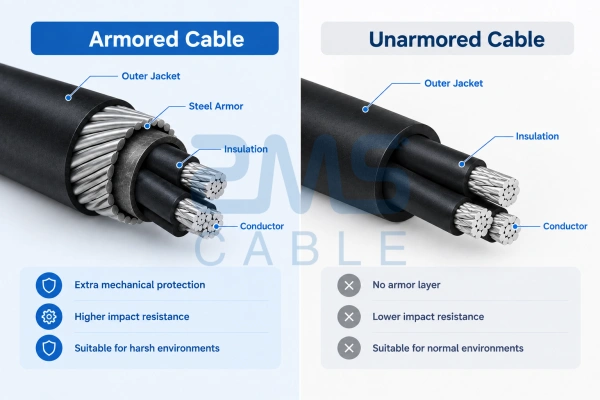
Zırhlı kablo kablo yalıtım katmanı ile dış kılıf arasında ek bir metal zırh katmanı bulunan güçlendirilmiş bir güç kablosudur. Yaygın zırh malzemeleri çelik bant ve çelik teldir; gereksinimlere bağlı olarak alüminyum bant zırhı da kullanılabilir.
Zırhlı kablonun genel yapısı, içten dışa, içerir:
iletken → yalıtım katmanı → iç astar katmanı → metal zırh katmanı → dış kılıf.
Metal zırh katmanı kablonun iletkenliğini değiştirmez ancak sıkıştırma gibi dış kuvvetlere direnebilir, darbe, tansiyon, ve hayvan ısırıkları, aynı zamanda belirli bir derecede elektromanyetik koruma sağlarken.
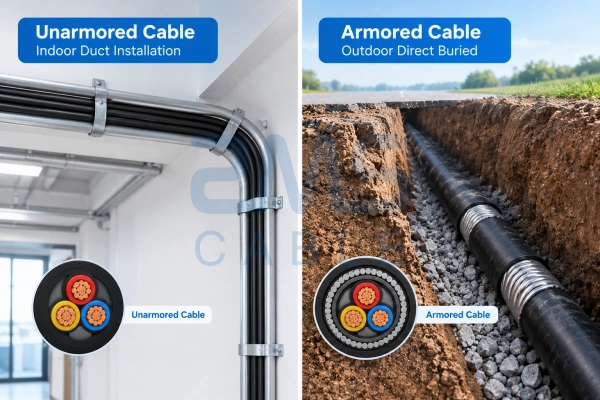
Zırhlı kablolar çoğunlukla doğrudan yer altına gömme gibi senaryolarda kullanılır, dış mekan kablo kanalları, endüstriyel tesisler, yol geçişleri, ve derin gömülü boru hatları.
Zırhsız kablo nedir?
Zırhsız kablo, herhangi bir metalik zırh koruma katmanı olmayan temel güç kablosudur.
Zırhsız kablonun standart yapısı yalnızca şunları içerir::
iletken → yalıtım katmanı → dış kılıf.
Zırhsız kablo özellikleri: Basit Yapı, esnek kablo, küçük bükülme yarıçapı, Kolay kurulum, ve daha düşük maliyet.
Zırhsız kablolar mekanik korumaya sahip değildir ve sıkıştırmaya dayanamaz, darbe, veya güçlü gerginlik. Zırhsız kablolar yalnızca tam korumalı iç mekan kablo kanalları gibi düşük riskli ortamlar için uygundur, kapalı kablo kanalları, ve dahili ekipman kablolaması.
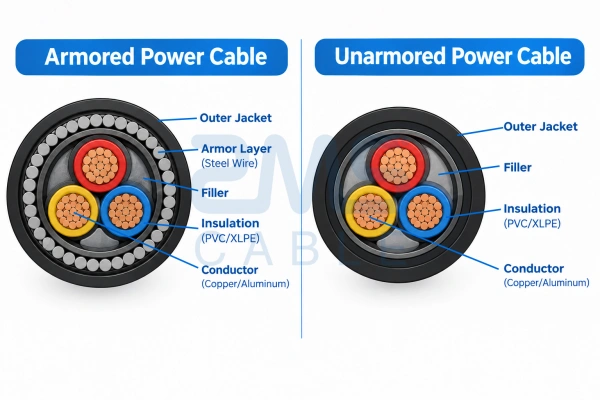
Zırhlı kablo ile zırhsız kablo arasındaki fark
| Tip | Zırhlı kablo | Zırhsız Kablo |
|---|---|---|
| Yapı | Metalik zırh katmanı | Zırh katmanı yok |
| Mekanik Koruma | Basınca/darbeye/gerilmeye dayanıklı, kemirgen önleyici/termit | Koruma yok, kolayca hasar görebilir |
| Kurulum | Yeraltı, doğrudan gömme, hendekler, sanayi siteleri | Kapalı, kablo kanalları, kanallar, korunan alanlar |
| Özellikler | Zor, ağır | Yumuşak, esnek, ışık |
| Ömür | Son derece dayanıklı, uzun ömürlü | Açık havada kolayca yaşlanır |
| Maliyet | Daha yüksek | Daha ekonomik |
Yaygın zırhlı kablo türleri
| Zırh Tipi | Kısaltma. | Yapı | Anahtar Uygulamalar |
|---|---|---|---|
| Çelik bant zırhlı | STA | Çift çelik bant, yüksek ezilme direnci | Düz doğrudan gömme, belediye ızgaraları, standart kanallar |
| İnce Çelik Tel Zırhlı | SWA | Bükülü ince teller, yüksek gerilme mukavemeti | Nehir/dağ geçişi, hava süspansiyonu, derin kuyular |
| Kaba Çelik Tel Zırhlı | CWA | Kaba tel takviyeli, ultra yüksek çekme mukavemeti | Uzun açıklıklı süspansiyon, madencilik, ağır hizmet |
| Alüminyum Bant Zırhlı | ATA | Hafif, korozyona dayanıklı, manyetik olmayan | Yüksek korozyonlu ortamlar, alternatif akım manyetik alanları |
Zırhlı Kablolar vs. Zırhsız Kablolar: Nasıl Seçilir?
Yurtdışı mühendislik standartlarına ve pratik saha deneyimine dayanmaktadır, ZMS Kabloları basit bir seçim mantığını özetler:
Zırhlı Kablo Seçimi Senaryoları:
- Kabloların doğrudan yer altına gömülmesi gerekiyor;
- Açık hava, alan, veya fabrika alanı;
- Mekanik ezilme riski taşıyan alanlar, kazma, veya etki;
- Yaban hayatı ısırıklarının olduğu orman alanları ve kırsal alanlar;
- Nehirleri geçmek, kuleler, veya çekme mukavemeti gerektiren yüksek irtifa süspansiyonu.
Zırhsız Kablo Seçimi Senaryoları:
- Tamamen iç mekan kurulumu, kapalı kablo kanalları ve yalıtılmış kablo kanalları kullanarak;
- Ekipman içindeki dahili kablolama;
- Dış hasarlardan arındırılmış inşaat ortamı;
- Kapsamlı koruyucu önlemlerle sınırlı proje bütçesi.
Doğru Kablo Teklifleri: Müşteri Olarak Sağlamanız Gereken Bilgiler
Yurt dışı soruşturmaların çoğu tekrarlanan iletişimden ve düşük verimlilikten olumsuz etkileniyor, öncelikle eksik parametreler nedeniyle.
Hızlı teklifler için gerekli parametreleri derledik, gönderim sırasında hangi mühendislerin doğrudan başvurabileceği:
- Uygulama Standardı: IEC / BS / GB ve projeye özel diğer standartlar
- Gerilim Değeri: 0.6/1kV, 10kV, 35kV, vesaire.
- Damar Sayısı ve Kesit: Örn., 3×95+1×50mm²…
- Zırhlama Gereksinimleri: Çelik bant zırhı / Çelik tel zırh / Zırhsız
- Kılıf malzemesi: PVC / PE / LSZH alev geciktirici ve yangına dayanıklı…
- Kullanım Ortamı: Kapalı / Doğrudan Defin / Dış mekan / Aşındırıcı / Aşırı Soğuk
- Satın Alma Miktarı, Teslimat Yeri, ve Teslimat Süresi Gereksinimleri
Sıkça Sorulan Sorular (SSS)
1. Çeyrek: Zırhlı kablolar ekranlı kablo olarak kullanılabilir mi??
- Zırhlı kablolar temel elektromanyetik koruma sağlayabilir, ancak özel korumalı kabloların yerini alamazlar.
- Yüksek frekans için, hassas ekipman, ve yüksek gerilim ölçüm uygulamaları, profesyonel olarak ekranlanmış kablolara hâlâ ihtiyaç duyulmaktadır.
2. Çeyrek: Zırhsız kablolar geçici olarak dış mekana döşenebilir mi??
- tavsiye edilmez. Kısa süreli maruz kalma kılıfın yaşlanmasını hızlandıracaktır, çatlama, ve su girişi, ve muhtemelen yalıtım arızasına yol açacaktır.
3. Çeyrek: Zırhlı kablolar topraklanmalıdır?
- Evet. Mühendislik spesifikasyonları, indüklenen voltajı ve sızıntı güvenlik tehlikelerini önlemek için zırh katmanının her iki ucunda güvenilir topraklama gerektirir.
4. Çeyrek: İki kablo türü arasında akım taşıma kapasitesinde fark var mı??
- Aynı kesit ve malzeme altında, akım taşıma kapasitesi temelde aynıdır. Zırh yapısı iletkenliği etkilemez, yalnızca mekanik korumayı artırır.
Neden ZMS Zırhlı/Zırhsız Kabloları Seçmelisiniz??
Uzun süredir yurtdışındaki yüklenicilere ve EPC yüklenicilerine hizmet veren bir kablo üreticisi olarak, Yurtdışı projelerin istikrar ve uyumluluk açısından daha yüksek gereksinimlere sahip olduğunun bilincindeyiz.
ZMS Kablosu Zırhlı ve zırhsız güç kablolarının tamamını IEC gibi uluslararası standartlara sıkı sıkıya uygun olarak üretmektedir., BS, ve Büyük Britanya. İletkenlerde kullanılan malzemeler, izolasyon, zırh, ve kılıflar tamamen kontrol edilir, Geri dönüştürülmüş malzemeler ve yanlış etiketlenmiş kesitler gibi potansiyel mühendislik risklerini ortadan kaldırır.
Üstelik, eksiksiz bir fabrika test raporları seti sağlayabiliriz, yeterlilik belgeleri, ve üçüncü taraf sertifikaları. Alev geciktirici için özelleştirilmiş tasarımları da destekliyoruz, yangına dayanıklı, soğuk algınlığı, ve özel ortamlar için korozyona dayanıklı kablolar, çeşitli enerji dağıtım projelerinin ihtiyaçlarının karşılanması.
Çözüm
Zırhlı ve zırhsız kablolar arasında mutlak bir üstünlük veya aşağılık yoktur.; her şey belirli uygulama senaryosuna uygunlukla ilgilidir. Kontrollü iç ortamlar için zırhsız kablolar tercih edilir, Zırhlı kablolar ise dış mekanlarda doğrudan gömme ve zorlu koşullar için uzun süreli kararlı çalışmayı sağlamak açısından gereklidir..
Zırhlı yapıya ihtiyacınız olup olmadığından veya model ve standartların nasıl seçileceğinden emin değilseniz, lütfen proje parametrelerinizi ve inşaat ortamınızı gönderin. ZMS Kablo teknik ekibi ücretsiz profesyonel seçim çözümü ve doğru fiyat teklifi sunacaktır.