الكابلات المدرعة وغير المدرعة هما نوعان من كابلات الطاقة, وهما النوعان الأكثر استخدامًا لكابلات الطاقة. كابلات الطاقة كلها تتكون من موصل, عزل الموصل, وطبقة الحماية الخارجية.
ال الفرق بين الكابلات المدرعة والكابلات غير المدرعة يكمن في وجود أو عدم وجود طبقة درع. بالمقارنة مع الكابلات غير المدرعة, الكابلات المدرعة لديها إضافية هيكل الحماية المعدنية, تقديم مقاومة أقوى للضغط, تأثير, القوارض, وقوة الشد. ويمكن استخدامها في الدفن المباشر, في الهواء الطلق, والبيئات الصناعية القاسية.
بناءً على سنوات من الخبرة في المشاريع الخارجية, وجدت شركة ZMS Cables أن معظم حالات فشل المشاريع لا ترجع إلى مشكلات تتعلق بجودة المنتج, بل لسيناريوهات التطبيق غير الصحيحة وتكوينات الدروع غير المتوافقة, مما يؤدي إلى إعادة العمل. ستوفر هذه المقالة تحليلاً متعمقًا لهذين النوعين من الكابلات لمساعدة العملاء على تخفيف المخاطر.
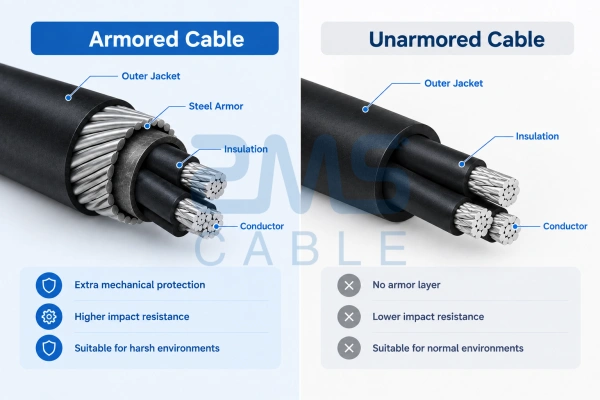
ما هو الكابل المدرع?
ما هو الكابل غير المدرع?
كابل مدرع عبارة عن كابل طاقة مقوى بطبقة درع معدنية إضافية بين الطبقة العازلة للكابل والغلاف الخارجي. المواد المدرعة الشائعة هي الشريط الفولاذي والأسلاك الفولاذية; يمكن أيضًا استخدام درع شريط الألمنيوم وفقًا للمتطلبات.
الهيكل العام للكابل المدرع, من الداخل الى الخارج, يشمل:
الموصل ← الطبقة العازلة ← طبقة البطانة الداخلية ← طبقة الدروع المعدنية ← الغلاف الخارجي.
لا تغير الطبقة المدرعة المعدنية موصلية الكابل ولكنها يمكنها مقاومة القوى الخارجية مثل الضغط, تأثير, توتر, وعضات الحيوانات, مع توفير درجة معينة من الحماية الكهرومغناطيسية.
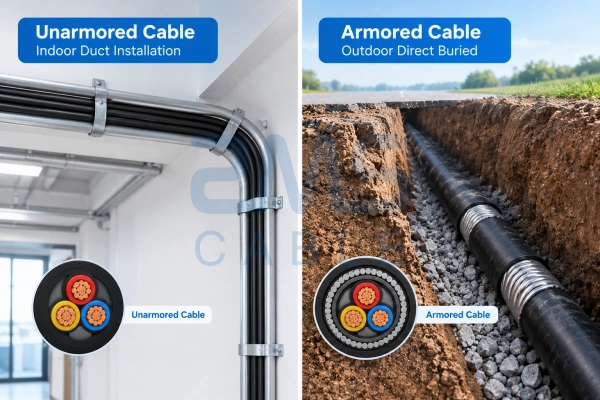
تُستخدم الكابلات المدرعة بشكل أساسي في سيناريوهات مثل الدفن المباشر تحت الأرض, صواني الكابلات في الهواء الطلق, النباتات الصناعية, معابر الطرق, وخطوط الأنابيب المدفونة بعمق.
ما هو الكابل غير المدرع?
الكابل غير المدرع هو كابل طاقة أساسي بدون أي طبقة حماية معدنية مدرعة.
يتضمن الهيكل القياسي للكابل غير المدرع فقط:
موصل ← طبقة عازلة ← الغلاف الخارجي.
ميزات الكابلات غير المدرعة: هيكل بسيط, كابل مرن, نصف قطر الانحناء الصغير, تركيب سهل, وتكلفة أقل.
تفتقر الكابلات غير المدرعة إلى الحماية الميكانيكية ولا يمكنها تحمل الضغط, تأثير, أو التوتر الشديد. الكابلات غير المدرعة مناسبة فقط للبيئات منخفضة المخاطر مثل القنوات الداخلية المحمية بالكامل, صواني الكابلات المغلقة, وأسلاك المعدات الداخلية.
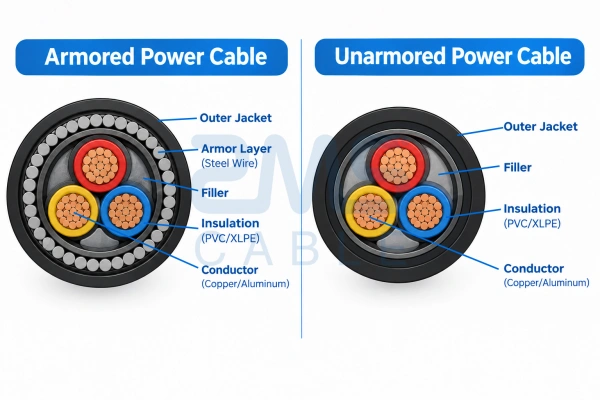
الفرق بين الكابلات المدرعة والكابلات غير المدرعة
| يكتب | كابل مدرع | كابل غير مدرع |
|---|---|---|
| بناء | طبقة درع معدنية | لا توجد طبقة درع |
| الحماية الميكانيكية | مقاومة الضغط/التأثير/الشد, مكافحة القوارض/النمل الأبيض | لا حماية, تتلف بسهولة |
| تثبيت | تحت الأرض, الدفن المباشر, الخنادق, المواقع الصناعية | داخلي, صواني الكابلات, قنوات, المناطق المحمية |
| سمات | صعب, ثقيل | ناعم, مرن, ضوء |
| عمر | متينة للغاية, طويلة الأمد | الأعمار في الهواء الطلق بسهولة |
| يكلف | أعلى | أكثر اقتصادا |
الأنواع الشائعة من الكابلات المدرعة
| نوع الدرع | أبر. | بناء | التطبيقات الرئيسية |
|---|---|---|---|
| شريط الصلب مدرع | ستا | شريط فولاذي مزدوج, مقاومة عالية للسحق | الدفن المباشر المسطح, الشبكات البلدية, القنوات القياسية |
| غرامة أسلاك الفولاذ المدرعة | سوا | أسلاك رفيعة مجدولة, قوة شد عالية | معبر النهر/الجبل, تعليق هوائي, الآبار العميقة |
| أسلاك الفولاذ الخشنة المدرعة | CWA | عززت الأسلاك الخشنة, قوة الشد فائقة | تعليق طويل المدى, التعدين, واجب ثقيل |
| شريط الألمنيوم المدرع | آتا | خفيف الوزن, مقاومة للتآكل, غير مغناطيسية | بيئات عالية التآكل, المجالات المغناطيسية AC |
الكابلات المدرعة مقابل. الكابلات غير المدرعة: كيفية الاختيار?
بناءً على المعايير الهندسية الخارجية والخبرة الميدانية العملية, تلخص ZMS Cables منطق الاختيار البسيط:
سيناريوهات لاختيار الكابلات المدرعة:
- يجب دفن الكابلات مباشرة تحت الأرض;
- في الهواء الطلق في الهواء الطلق, مجال, أو أرض المصنع;
- المواقع التي تنطوي على مخاطر التكسير الميكانيكي, حفر, أو التأثير;
- مناطق الغابات والمناطق الريفية مع لدغات الحياة البرية;
- عبور الأنهار, أبراج, أو تعليق على ارتفاعات عالية يتطلب قوة الشد.
سيناريوهات لاختيار الكابلات غير المدرعة:
- تركيب داخلي بالكامل, باستخدام القنوات المغلقة وصواني الكابلات المغلقة;
- الأسلاك الداخلية داخل المعدات;
- بيئة البناء خالية من الأضرار الخارجية;
- ميزانية المشروع محدودة مع تدابير وقائية شاملة طوال الوقت.
أسعار الكابلات دقيقة: المعلومات التي تحتاج إلى تقديمها كعميل
تعاني العديد من الاستفسارات الخارجية من التواصل المتكرر وانخفاض الكفاءة, ويرجع ذلك في المقام الأول إلى المعلمات غير مكتملة.
لقد قمنا بتجميع المعلمات الأساسية لعروض الأسعار السريعة, والتي يمكن للمهندسين الرجوع إليها مباشرة عند الإرسال:
- معيار التنفيذ: اللجنة الانتخابية المستقلة / بكالوريوس / GB وغيرها من المعايير المحددة للمشروع
- تصنيف الجهد: 0.6/1كيلو فولت, 10كيلو فولت, 35كيلو فولت, إلخ.
- عدد النوى والمقطع العرضي: على سبيل المثال, 3×95+1×50 ملم²…
- متطلبات التدريع: درع الشريط الصلب / درع من الأسلاك الفولاذية / غير مدرعة
- مادة غمد: بولي كلوريد الفينيل / بي / LSZH مثبطات اللهب ومقاومة للحريق…
- بيئة الاستخدام: داخلي / الدفن المباشر / في الهواء الطلق / تآكل / بارد للغاية
- كمية الشراء, موقع التسليم, ومتطلبات وقت التسليم
الأسئلة المتداولة (التعليمات)
س1: هل يمكن استخدام الكابلات المدرعة ككابلات محمية?
- يمكن للكابلات المدرعة توفير الحماية الكهرومغناطيسية الأساسية, لكنها لا تستطيع استبدال الكابلات المحمية المخصصة.
- للترددات العالية, المعدات الدقيقة, وتطبيقات قياس الجهد العالي, ولا تزال هناك حاجة إلى كابلات محمية بشكل احترافي.
Q2: هل يمكن وضع الكابلات غير المدرعة مؤقتًا في الخارج?
- لا ينصح به. التعرض على المدى القصير سوف يسرع شيخوخة الغمد, تكسير, ودخول الماء, ومن المرجح أن يؤدي إلى فشل العزل.
س3: يجب تأريض الكابلات المدرعة?
- نعم. تتطلب المواصفات الهندسية تأريضًا موثوقًا به عند طرفي الطبقة المدرعة لتجنب مخاطر السلامة المتعلقة بالجهد الكهربي والتسرب.
س 4: هل هناك اختلاف في القدرة الاستيعابية الحالية بين نوعي الكابلات؟?
- تحت نفس المقطع العرضي والمواد, القدرة الاستيعابية الحالية هي نفسها في الأساس. هيكل الدرع لا يؤثر على الموصلية, يحسن الحماية الميكانيكية فقط.
لماذا تختار كابلات ZMS المدرعة/غير المدرعة?
كشركة مصنعة للكابلات، خدمت لفترة طويلة المقاولين الخارجيين ومقاولي EPC, نحن نفهم أن المشاريع الخارجية لديها متطلبات أعلى للاستقرار والامتثال.
كابل ZMS تقوم بتصنيع مجموعتها الكاملة من كابلات الطاقة المدرعة وغير المدرعة بما يتفق بدقة مع المعايير الدولية مثل اللجنة الكهروتقنية الدولية (IEC)., بكالوريوس, و غيغابايت. المواد المستخدمة في الموصلات, عازلة, درع, ويتم التحكم في الأغماد بشكل كامل, القضاء على المخاطر الهندسية المحتملة مثل المواد المعاد تدويرها والمقاطع العرضية ذات العلامات الزائفة.
بالإضافة إلى, يمكننا تقديم مجموعة كاملة من تقارير اختبار المصنع, وثائق التأهيل, وشهادات الطرف الثالث. نحن ندعم أيضًا التصميمات المخصصة لمثبطات اللهب, مقاوم للحرائق, مقاومة للبرد, والكابلات المقاومة للتآكل للبيئات الخاصة, مطابقة احتياجات مشاريع توزيع الطاقة المختلفة.
خاتمة
لا يوجد تفوق أو دونية مطلقة بين الكابلات المصفحة وغير المصفحة; الأمر كله يتعلق بالملاءمة لسيناريو التطبيق المحدد. يُفضل استخدام الكابلات غير المدرعة في البيئات الداخلية الخاضعة للرقابة, في حين أن الكابلات المدرعة ضرورية للدفن المباشر في الهواء الطلق والظروف القاسية لضمان تشغيل مستقر على المدى الطويل.
إذا لم تكن متأكدًا مما إذا كنت بحاجة إلى بناء مدرع أو كيفية اختيار النماذج والمعايير, يرجى إرسال معلمات المشروع وبيئة البناء. سيوفر الفريق الفني لشركة ZMS Cable حلول اختيار احترافية مجانية وعروض أسعار دقيقة.