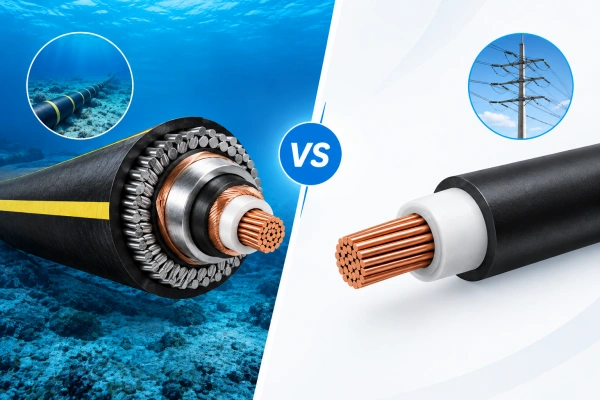
What Is the Difference Between Offshore Power Cable and Regular Power Cable?

Power cables used in offshore environments face challenges that ordinary land cables rarely encounter. Exposure to seawater, 습기, 기계적 스트레스, and extreme weather conditions requires specialized cable designs. 그래서, what makes offshore power cables different from regular power cables?

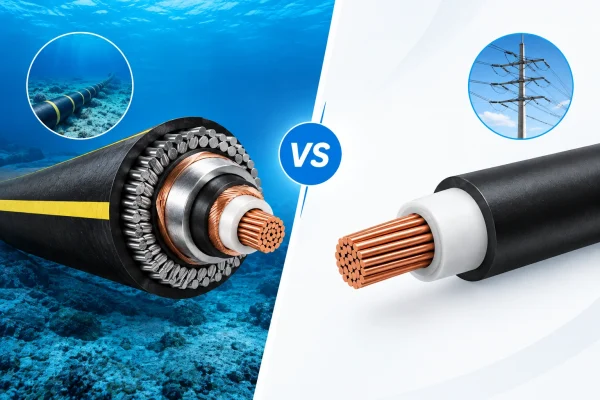
Offshore Power Cable VS Regular Power Cable

What Is Offshore Power Cable?

An offshore power cable is a specially designed cable used to transmit electrical power in marine and offshore environments. Unlike conventional cables installed on land, offshore cables must operate under harsh conditions, including seawater exposure, underwater pressure, wave movement, and mechanical impact.

Typical applications include:

  • Offshore wind farms
  • Offshore oil and gas platforms
  • Island power supply systems
  • Coastal power transmission projects
  • Submarine grid connections

In offshore wind projects, power cables play a critical role in connecting wind turbines with offshore substations and transferring generated electricity back to the onshore grid.

A typical offshore wind power transmission system includes:

Wind Turbine → Array Cable → Offshore Substation → Export Cable → Onshore Grid

Because these cables are installed in demanding marine environments, their design requirements are much higher than ordinary electrical cables.

What Is Regular Power Cable?

Regular 전원 케이블 is mainly designed for land-based electrical transmission and distribution systems.

Common applications include:

  • Underground power networks
  • Industrial facilities
  • Buildings
  • Commercial power distribution
  • Utility projects

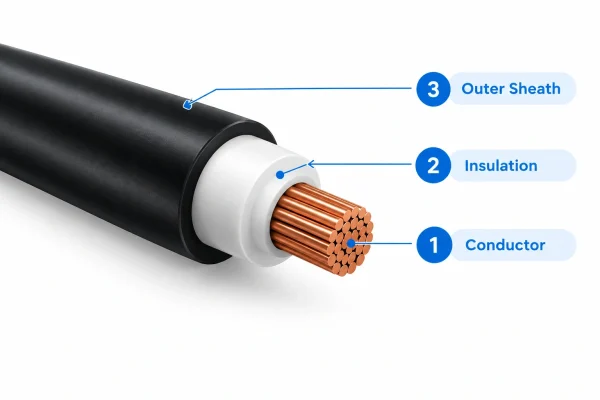
Typical regular power cables consist of:

  • 지휘자
  • 절연층
  • 외피

응용 프로그램에 따라, they may also include shielding, 갑옷, or additional protection layers.

하지만, most land-based cables do not need to withstand direct seawater exposure, underwater pressure, or long-term mechanical stress from marine environments.

Offshore Power Cable vs Regular Power Cable: Key Differences

The biggest differences between offshore power cables and regular power cables are related to 환경 보호, 기계적 강도, 재료, and structural design.

특징 Offshore Power Cable Regular Power Cable
Application Environment 선박, 난바다 쪽으로 부는, underwater projects Land-based applications
Water Protection Advanced waterproof design Basic moisture protection
부식 저항 Designed for seawater exposure Designed for normal environments
Mechanical Protection Usually includes armor layers May not require armor
설치 방법 Subsea laying, seabed burial, offshore installation 지하철, cable tray, 도관
Structural Design Multiple protective layers Simpler construction

Different Operating Environments

Seawater contains salt and other minerals that can accelerate corrosion of metal components. Without proper protection, moisture can gradually penetrate the cable structure and affect insulation performance. 그러므로, offshore power cables usually require:

  • Water-blocking layers
  • Metallic sheaths
  • Corrosion-resistant materials
  • Protective outer layers

Submarine and offshore cables are exposed to various mechanical forces, ~와 같은: Wave movement, Ocean currents, Seabed movement, Cable installation tension, Fishing activities and Ship anchor impact. To withstand these conditions, offshore cables often use reinforced structures, especially armor layers.

Offshore projects may experience weather conditions such as strong windsor storm waves. So cable designs must ensure stable operation throughout the expected service life.

Offshore Power Cables Have More Complex Structures

A major difference between offshore and regular power cables is the number of protection layers.Typical regular power cable structure:

regular power cable structure

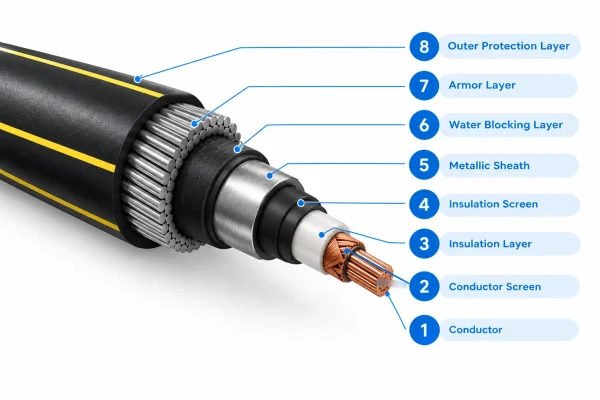
The main purpose is to safely transmit electricity while protecting the conductor in normal environments.Typical offshore power cable structure:

offshore power cable structure

Each layer provides a specific function:

Layer 기능
지휘자 Transmits electrical power
단열재 Prevents electrical leakage
Metallic Sheath Blocks moisture and provides shielding
Water Blocking Layer Prevents water penetration
Armor Layer Protects against mechanical damage
Outer Layer Protects cable surface

The additional protection layers make offshore cables more reliable but also more complex to manufacture and install.

Offshore Cables Require Stronger Mechanical Protection

During cable installation and operation, cables may face external impact and seabed friction. Armor layers help protect the cable from these mechanical stresses.

Common armor materials include:

  • 아연 도금 강선
  • 스틸테이프
  • Other reinforced materials

For projects with higher mechanical risks, double-armored cable designs may be considered.

Different Material Requirements

Material selection is another key difference between offshore and regular cables.

Insulation Materials

Both offshore and regular power cables may use XLPE insulation because of its excellent electrical performance.

XLPE provides:

  • 고온 저항
  • Good dielectric performance
  • 긴 서비스 수명
  • Low energy loss

하지만, offshore cables require additional protection around the insulation system because moisture can seriously affect cable reliability.

Outer Sheath Materials

Offshore cables need outer materials with stronger resistance to:

  • Salt
  • UV 방사선
  • Mechanical abrasion

The outer sheath must maintain protection for many years in marine environments.

Offshore Wind Projects Require Specialized Cable Designs

The growth of offshore wind energy has increased demand for reliable offshore power cables. An offshore wind farm usually requires different types of cables:

Array Cable

Connects individual wind turbines together.

Main requirements:

  • Flexible installation
  • Reliable power transmission
  • Resistance to marine conditions

Export Cable

Transfers electricity from the offshore substation to the onshore grid. Because export cables often cover long distances, they usually require:

  • Higher voltage ratings
  • Stronger mechanical protection
  • Long-term reliability

Choosing the correct cable design is essential for reducing maintenance costs and improving project efficiency.

How to Choose the Right Offshore Power Cable?

Selecting an offshore power cable requires considering several project factors.

Project Application

First determine where the cable will be used:

  • Offshore wind farm
  • Oil platform
  • Island power connection
  • Marine infrastructure project

Different applications may require different cable structures.

Voltage Level

Cable selection depends on the required transmission capacity. Common considerations include:

  • Medium voltage systems
  • High voltage systems
  • Long-distance transmission requirements

Higher voltage projects usually require more advanced insulation and protection designs.

설치환경

Important factors include:

  • 수심
  • Seabed conditions
  • Burial requirements
  • Installation method
  • Mechanical protection requirements

A cable designed for shallow coastal waters may not be suitable for deep-water applications.

Standards and Specifications

International offshore cable projects usually follow recognized standards, ~와 같은:

  • IEC 표준
  • BS standards
  • ASTM standards
  • Customer-specific specifications

Working with a supplier that understands different international requirements can help ensure project compatibility.

Why Choose ZMS Offshore Cable Solutions?

Offshore cable projects require more than just a standard product. They need solutions based on application conditions, technical requirements, and installation environments.

ZMS provides customized offshore cable solutions for global customers, supporting projects with:

  • Cable selection assistance
  • Customized specifications
  • Quality inspection coordination
  • International standard requirements
  • Project-based technical support

With experience serving customers in different markets, ZMS helps clients select suitable cable solutions for offshore power transmission applications.

ZMS Company
ZMS Company

결론

The difference between offshore power cables and regular power cables mainly comes from their operating environments. Compared with standard land cables, offshore power cables require:

  • Stronger waterproof protection
  • Better corrosion resistance
  • More durable mechanical protection
  • More complex structural designs

For offshore wind farms, marine power systems, and underwater transmission projects, selecting the right cable structure is essential for long-term reliability.

If you are planning an offshore power project and need help selecting the right cable solution, contact ZMS for customized technical support.