Armored 및 Unarmored 케이블은 모두 전원 케이블 유형입니다., 가장 일반적으로 사용되는 두 가지 유형의 전원 케이블입니다.. 전원 케이블 모두 도체로 구성, 도체 절연, 및 외부 보호층.
그만큼 아머드 케이블과 비아머 케이블의 차이점 갑옷 층의 존재 여부에 달려 있습니다.. 비보호 케이블과 비교, 장갑 케이블에는 추가 기능이 있습니다. 금속 보호 구조, 압력에 대한 더 강한 저항력 제공, 영향, 설치류, 인장강도 및 인장강도. 직접 매장에 사용할 수 있습니다., 집 밖의, 그리고 가혹한 산업 환경.
다년간의 해외 프로젝트 경험을 바탕으로, ZMS Cables는 대부분의 프로젝트 실패가 제품 품질 문제로 인한 것이 아니라는 사실을 발견했습니다., 오히려 잘못된 애플리케이션 시나리오 및 호환되지 않는 갑옷 구성, 재작업으로 이어지는. 이 기사에서는 고객이 위험을 완화하는 데 도움이 되는 두 가지 유형의 케이블에 대한 심층 분석을 제공합니다..
기갑 케이블이란 무엇입니까??
비무장 케이블이란??
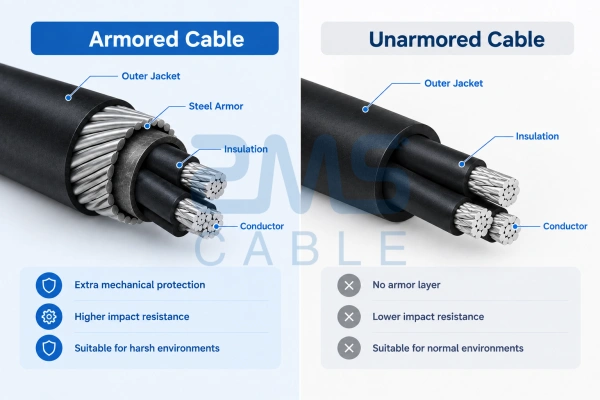
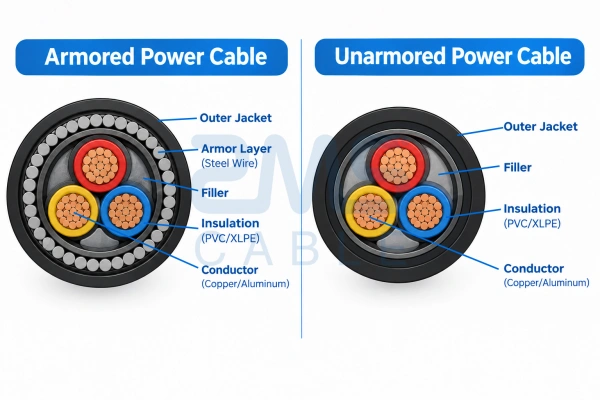
기갑 케이블 케이블 절연층과 외피 사이에 금속 외장층을 추가한 강화 전원 케이블입니다.. 일반적인 갑옷 재료는 강철 테이프와 강철 와이어입니다.; 요구 사항에 따라 알루미늄 테이프 갑옷도 사용할 수 있습니다..
기갑 케이블의 전체 구조, 안쪽에서 바깥쪽으로, 포함:
도체 → 절연층 → 내부 라이닝 층 → 금속 갑옷 층 → 외부 피복.
금속 갑옷 층은 케이블의 전도성을 변경하지 않지만 압축과 같은 외부 힘에 저항할 수 있습니다., 영향, 긴장, 그리고 동물에게 물렸을 때, 동시에 어느 정도의 전자파 차폐도 제공합니다..
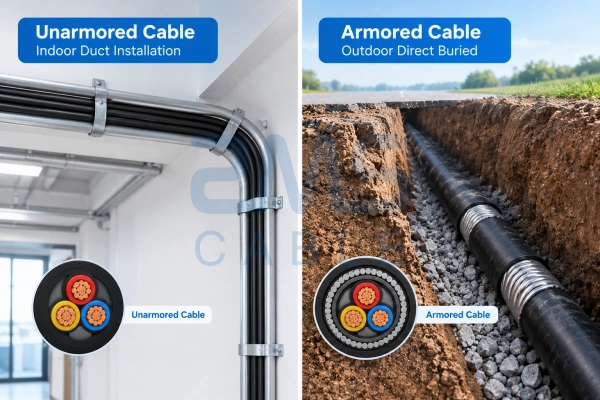
기갑 케이블은 주로 지하 직접 매설과 같은 시나리오에 사용됩니다., 야외 케이블 트레이, 산업 플랜트, 도로 건널목, 그리고 깊게 파묻힌 파이프라인.
비무장 케이블이란??
Unarmored 케이블은 금속 갑옷 보호층이 없는 기본 전원 케이블입니다..
비아머 케이블의 표준 구조는 다음과 같습니다.:
도체 → 절연층 → 외피.
비아머 케이블 기능: 간단한 구조, 유연한 케이블, 작은 굽힘 반경, 쉬운 설치, 그리고 더 낮은 비용.
비보호 케이블은 기계적 보호 기능이 부족하여 압축을 견딜 수 없습니다., 영향, 아니면 강한 긴장감. 비보호 케이블은 완전히 보호된 실내 도관과 같은 위험도가 낮은 환경에만 적합합니다., 동봉된 케이블 트레이, 및 내부 장비 배선.
아머드 케이블과 비아머 케이블의 차이점
| 유형 | 장갑 케이블 | 비무장 케이블 |
|---|---|---|
| 구조 | 금속 갑옷 레이어 | 갑옷 레이어 없음 |
| 기계적 보호 | 압력/충격/인장 저항성, 설치류/흰개미 방지 | 보호 없음, 쉽게 손상됨 |
| 설치 | 지하철, 직접 매장, 참호, 산업 현장 | 실내, 케이블 트레이, 도관, 보호지역 |
| 특징 | 딱딱한, 무거운 | 부드러운, 유연한, 빛 |
| 수명 | 내구성이 뛰어남, 오래 지속되는 | 야외에서 쉽게 노화 |
| 비용 | 더 높은 | 더욱 경제적 |
일반적인 유형의 장갑 케이블
| 방어구 종류 | 약어. | 구조 | 주요 애플리케이션 |
|---|---|---|---|
| 강철 테이프 기갑 | STA | 이중 강철 테이프, 높은 분쇄 저항 | 평직직매, 도시 그리드, 표준 덕트 |
| 고급 강철 와이어 기갑 | SWA | 꼬인 가는 전선, 높은 인장 강도 | 강/산 횡단, 공중 서스펜션, 깊은 우물 |
| 거친 강철 와이어 기갑 | CWA | 거친 와이어 강화, 매우 높은 인장 강도 | 장스팬 서스펜션, 채광, 헤비 듀티 |
| 알루미늄 테이프 기갑 | ATA | 경량, 부식 방지, 비자성 | 부식이 심한 환경, AC 자기장 |
기갑 케이블과 비교. 비아머 케이블: 선택 방법?
해외 엔지니어링 표준 및 실무 현장 경험을 바탕으로, ZMS 케이블은 간단한 선택 논리를 요약합니다.:
외장 케이블 선택 시나리오:
- 케이블은 지하에 직접 매설해야 함;
- 야외 야외, 필드, 아니면 공장 부지;
- 기계적 파쇄의 위험이 있는 현장, 파기, 또는 영향;
- 야생동물에게 물릴 수 있는 산림 지역과 농촌 지역;
- 강을 건너다, 타워, 또는 인장강도가 요구되는 고지대 서스펜션.
비보호 케이블 선택 시나리오:
- 전체 실내 설치, 밀폐형 도관 및 밀폐형 케이블 트레이 사용;
- 장비 내부 배선;
- 외부손상이 없는 건축환경;
- 포괄적인 보호 조치를 갖춘 제한된 프로젝트 예산.
정확한 케이블 견적: 고객으로서 제공해야 할 정보
해외 문의가 많아 반복적인 의사소통과 낮은 효율성으로 어려움을 겪고 있습니다., 주로 불완전한 매개변수로 인해.
빠른 견적을 위한 필수 매개변수를 정리했습니다., 엔지니어가 제출 시 직접 참고할 수 있는 내용:
- 실행기준: IEC / 학사 / GB 및 기타 프로젝트 지정 표준
- 전압 정격: 0.6/1케이 V, 10케이 V, 35케이 V, 등.
- 코어 수 및 단면적: 예를 들어, 3×95+1×50mm²…
- 방어구 요구 사항: 강철 테이프 갑옷 / 스틸 와이어 갑옷 / 비무장
- 외장재: PVC / 체육 / LSZH 난연성 및 내화성…
- 사용환경: 실내 / 직접 매장 / 집 밖의 / 신랄한 / 매우 추움
- 구매 수량, 배송장소, 및 배달 시간 요구 사항
자주 묻는 질문 (FAQ)
1분기: 외장 케이블을 차폐 케이블로 사용할 수 있습니까??
- 강화된 케이블은 기본적인 전자기 차폐 기능을 제공할 수 있습니다., 하지만 전용 차폐 케이블을 대체할 수는 없습니다..
- 고주파용, 정밀 장비, 및 고전압 계량 애플리케이션, 전문적으로 차폐된 케이블이 여전히 필요합니다..
2분기: 비보호 케이블을 임시로 옥외에 배치할 수 있습니까??
- 권장되지 않습니다. 단기 노출로 인해 외장 노화가 가속화됩니다., 열분해, 그리고 물 유입, 절연 불량으로 이어질 가능성이 높습니다..
3분기: 보호 케이블을 접지해야 함?
- 예. 엔지니어링 사양에서는 유도 전압 및 누출 안전 위험을 방지하기 위해 갑옷 층의 양쪽 끝에서 안정적인 접지가 필요합니다..
4분기: 두 가지 유형의 케이블 사이에 전류 전달 용량에 차이가 있습니까??
- 동일한 단면과 재질로, 현재 운반 능력은 기본적으로 동일합니다.. 갑옷 구조는 전도성에 영향을 미치지 않습니다., 기계적 보호만 향상됩니다..
ZMS Armored/Unarmored 케이블을 선택하는 이유?
오랫동안 해외 계약업체 및 EPC 계약업체에 서비스를 제공해 온 케이블 제조업체로서, 우리는 해외 프로젝트의 안정성과 규정 준수에 대한 요구 사항이 더 높다는 것을 알고 있습니다..
ZMS 케이블 IEC와 같은 국제 표준을 엄격히 준수하여 모든 종류의 장갑 및 비보호 전원 케이블을 제조합니다., 학사, 그리고 GB. 전도체에 사용되는 재료, 격리, 갑옷, 덮개는 완전히 제어됩니다., 재활용 재료 및 허위 라벨이 붙은 단면과 같은 잠재적인 엔지니어링 위험을 제거합니다..
뿐만 아니라, 우리는 완전한 공장 테스트 보고서 세트를 제공할 수 있습니다., 자격 서류, 및 타사 인증. 난연성을 위한 맞춤형 디자인도 지원합니다., 내화성, 내한성, 특수 환경을 위한 내부식성 케이블, 다양한 배전 프로젝트의 요구 사항에 부합.
결론
장갑 케이블과 비 장갑 케이블 사이에는 절대적인 우월성이나 열등함이 없습니다.; 이는 특정 애플리케이션 시나리오에 대한 적합성에 관한 것입니다.. 제어된 실내 환경에는 비보호 케이블이 선호됩니다., 장기간 안정적인 작동을 보장하려면 실외 직접 매설 및 가혹한 조건에 장갑 케이블이 필수적입니다..
장갑 제작이 필요한지, 모델 및 표준을 선택하는 방법이 확실하지 않은 경우, 프로젝트 매개변수와 건설 환경을 보내주세요.. ZMS 케이블 기술팀은 전문적인 선택 솔루션과 정확한 견적을 무료로 제공합니다..