When a customer asks for shielded cable, does that mean they need shielded control cable? Not necessarily.
In the cable industry, these two terms are often confused. The reason is simple: control describes what a cable is used for, while shielded describes how it is constructed.
A cable can be both shielded and designed for control applications. But shielded cables are also used in power supply, instrumentation and data transmission. In this article, we explore the differences between shielded cables and control cables, helping to clear up common misconceptions that may arise during product selection, quoting, and production.
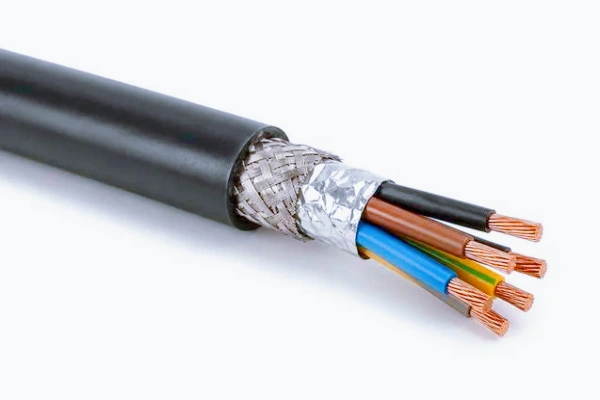
What Is the Difference Between Shielded Cable and Control Cable?
The easiest way to understand the difference is to look at what each term describes.
Control Cable: Designed to carry control signals between equipment, machines and control systems.
Shielded Cable: Built with a conductive layer to provide shielding. Its exact purpose depends on the cable design and application.
So, a shielded control cable is a control cable with an added shielding structure. However, a shielded power cable or shielded Ethernet cable belongs to a different application category. In other words, these terms are not opposites. They describe two different aspects of the same cable.
What Does Shielded Cable Look Like?
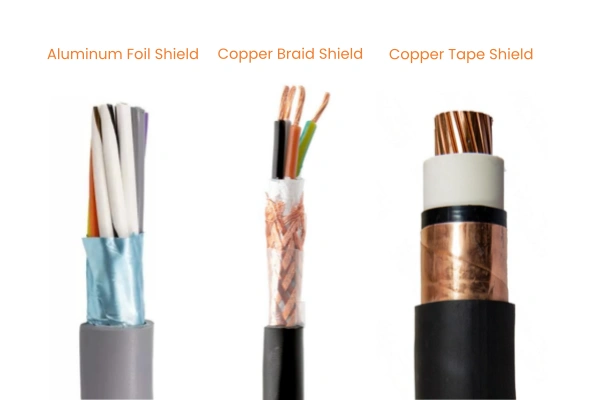
The main feature of shielded cable is its conductive shielding layer. Depending on the design, this layer may surround individual pairs, groups of conductors or the entire cable core. Different shielding materials and configurations are used for different cable applications.
| Shielding Type | Main Features | Common Applications |
|---|---|---|
| Aluminum Foil | Lightweight and provides broad coverage | Instrumentation and communication cables |
| Copper Braid | Woven metal structure with good flexibility | Control and communication cables |
| Copper Tape | Metallic tape construction | Certain power and specialty cables |
| Individual Shield | Separately shields individual pairs or groups | Instrumentation and multi-pair cables |
| Overall Shield | Surrounds the complete cable core | Control and instrumentation cables |
The right shielding structure depends on the application, electrical requirements and installation conditions. Proper grounding and bonding are also important for shielding performance.
For example, a shielded instrumentation cable and a medium-voltage power cable may both contain metallic layers, but those layers do not necessarily serve the same purpose.
Which Types of Cables Can Have Shielding?
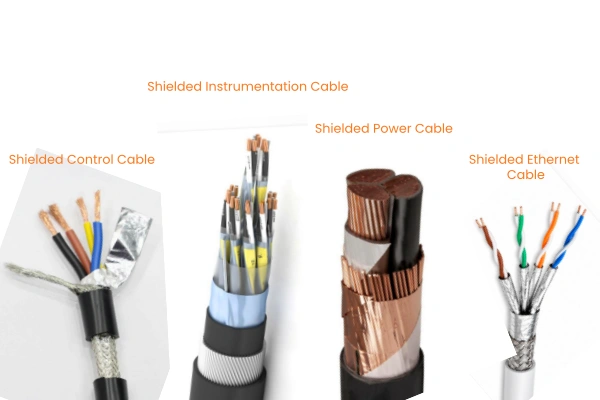
Shielding is not limited to control cables. It can be found in several cable categories, depending on their intended use.
| Cable Type | Main Application | Shielding Purpose |
|---|---|---|
| Shielded Control Cable | Industrial equipment and automation | Helps reduce signal interference |
| Shielded Instrumentation Cable | Sensors and measuring systems | Helps maintain signal integrity |
| Shielded Power Cable | Power transmission and distribution | Electric field control and other design-specific functions |
| Shielded Ethernet Cable | Industrial networks and data transmission | Helps reduce electromagnetic interference |
These examples show why the name “Shielded Cable” alone is not enough to identify a product. The application must come first. At ZMS, our cable range covers power, control, instrumentation, communication and other industrial applications. Different conductor, insulation, shielding and sheath configurations can be considered according to project requirements.
Does Every Industrial Cable Need Shielding?
No. Shielding is useful when the application requires protection against electromagnetic interference or other specific electrical functions. It is not a feature that every cable needs. For example, control and instrumentation cables installed near motors or variable frequency drives may need shielding to help maintain signal quality. Other installations may work perfectly well with unshielded cables.
There is also more to shielding performance than the metal layer itself. Cable routing, grounding, bonding and termination all matter. That is why it is better to choose shielding based on the actual working environment rather than simply adding it to every cable specification.
What Should You Confirm Before Requesting Shielded Cable Quotation?
This is where the distinction becomes especially important in cable trading. If a customer sends an inquiry saying only “Shielded Cable,” it is too early to decide which product to quote. First, find out what the cable will be used for.
A few simple questions can help:
- Is it for power supply, equipment control, instrumentation or data transmission?
- What is the rated voltage?
- How many cores or pairs are required?
- What conductor material and size are needed?
- Which insulation and outer sheath materials are specified?
- Is foil, braid, copper tape or another shielding structure required?
- Which standard or project specification should the cable follow?
- Where will the cable be installed?
- Not every project needs the same level of detail. For example, a shielded instrumentation cable inquiry may focus on pair configuration and individual shielding, while a power cable inquiry may require voltage level and metallic screen specifications.
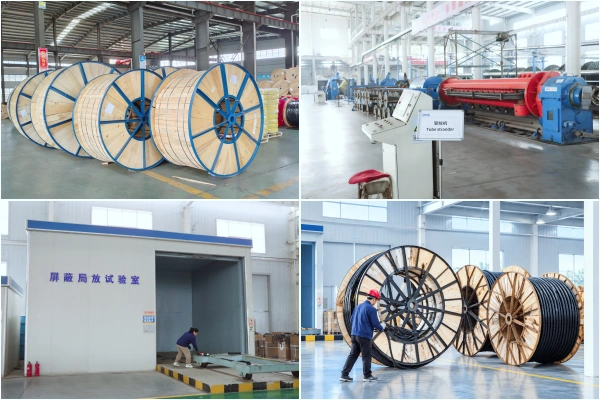
At ZMS, we work with customers to clarify these requirements before confirming a suitable cable configuration. With manufacturing experience dating back to 1990 and products supplied to more than 138 countries, we understand that different markets and projects can have very different technical requirements.
Our team can help review specifications, discuss suitable materials and arrange customized cable solutions. Strict quality control and attention to product details are also important parts of our production process. The clearer the original inquiry, the easier it is to recommend the right product and prepare an accurate quotation.
Frequently Asked Questions
Is Shielded Cable the Same as Control Cable?
No. Control cable describes the cable’s application, while shielded cable describes its construction.
Can Control Cable Be Supplied Without Shielding?
Yes. Both shielded and unshielded control cables are available. The choice depends on the signal requirements and installation environment.
What Is the Difference Between Foil and Braid Shielding?
Foil shielding uses a thin metallic layer and provides broad coverage. Braid shielding uses woven metal strands and generally offers greater flexibility and mechanical durability. The best option depends on the cable design and application.
Does Every Industrial Cable Need Shielding?
No. Shielding is only necessary when required by the application or electrical design. Installation conditions and grounding arrangements should also be considered.
What Information Is Needed for a Shielded Cable Quotation?
Start with the application, rated voltage, core or pair configuration, conductor size, insulation, shielding type, sheath material and applicable standard. Additional details may be needed depending on the cable type.
Conclusion
Shielded cable and control cable are not the same thing. One describes a construction feature, while the other tells us what the cable is designed to do. So, when a customer asks for shielded cable, don’t assume it means shielded control cable. Confirm the application first, then work out the right construction and specifications.
At ZMS, we supply a wide range of industrial cables and support customized solutions for different applications. Whether a project requires power, control or instrumentation cables, choosing the right design starts with understanding what the cable needs to do.